Table of Contents
Embedded Systems and Microcontroller Applications: Powering the Smart Technology Revolution
Your smartphone alarm wakes you at precisely 6:00 AM. The coffee maker, programmed overnight, begins brewing. Your car’s engine management system optimizes fuel injection as you drive to work. At the office, access cards communicate with door locks. Your fitness tracker counts steps and monitors heart rate. The industrial robot at the factory executes programmed motions with micron precision. Throughout your day, you interact with dozens—perhaps hundreds—of embedded systems and microcontrollers, most so seamlessly integrated into devices that their presence goes unnoticed.
These invisible computers represent one of the most significant yet least appreciated technological revolutions of the modern era. While consumer attention focuses on smartphones and cloud computing, embedded systems and microcontrollers have quietly transformed nearly every aspect of contemporary life. They’ve evolved from simple control circuits to sophisticated computing platforms running artificial intelligence algorithms, managing wireless communication, and enabling the Internet of Things that’s reshaping industries and society.
Understanding embedded systems and microcontrollers—their architecture, capabilities, applications, design challenges, and future evolution—is essential for engineers, product developers, business leaders, and anyone seeking to comprehend the technological foundations of our increasingly connected, automated world.
Defining Embedded Systems: Computers with Purpose
What Makes a System “Embedded”?
An embedded system is a specialized computing system designed to perform dedicated functions within a larger mechanical or electrical system. Unlike general-purpose computers that run diverse software for varied tasks, embedded systems are purpose-built for specific applications, integrating hardware and software optimized for particular functions.
Key distinguishing characteristics include:
Dedicated Functionality: Designed for specific tasks rather than general computing. A washing machine controller manages wash cycles; it doesn’t browse the internet or edit documents. This specialization enables optimization impossible in general-purpose systems.
Real-Time Operation: Many embedded systems must respond to inputs within strict time constraints. An airbag deployment system has milliseconds to decide and act. Missing deadlines isn’t merely inconvenient—it can be catastrophic.
Integration: Hardware and software are tightly integrated, often on single chips or compact modules. This integration reduces size, cost, and power consumption while improving reliability.
Resource Constraints: Typically operate with limited memory, processing power, and energy compared to general computers. Design requires careful resource management and optimization.
Reliability Requirements: Often operate continuously for years in environments with temperature extremes, vibration, humidity, or electromagnetic interference. Must maintain function under conditions that would disable consumer electronics.
Long Product Lifecycles: Unlike smartphones replaced every few years, embedded systems in automotive or industrial applications may operate for decades. Design must anticipate long-term reliability and support.
Architecture of Embedded Systems
Embedded systems share common architectural elements, though implementation varies widely:
Processing Unit: The computational core—microcontroller, microprocessor, digital signal processor (DSP), or field-programmable gate array (FPGA)—executing control algorithms and managing system operation.
Memory:
- Program Memory (Flash/ROM): Stores firmware—the software controlling system behavior. Non-volatile, retaining contents when powered off.
- Data Memory (RAM): Temporary storage for variables, buffers, and intermediate calculations. Volatile, losing contents without power.
- Non-Volatile Data Storage (EEPROM/Flash): Stores configuration parameters, calibration data, and other information requiring persistence across power cycles.
Input/Output Interfaces:
- Analog Inputs: Convert physical quantities (temperature, pressure, position) to digital values via analog-to-digital converters (ADCs).
- Digital I/O: Interface with switches, sensors, and other digital devices.
- Communication Interfaces: Serial (UART, SPI, I2C), network (Ethernet, CAN bus), wireless (Bluetooth, Wi-Fi, cellular).
- Output Drivers: Control actuators, displays, indicators, and other output devices.
Power Management: Voltage regulation, power sequencing, sleep modes, and energy harvesting circuitry ensuring efficient, reliable operation.
Clock and Timing: Oscillators and timing circuits providing the clock signals synchronizing system operation. Real-time clocks (RTCs) maintain accurate timekeeping.
Embedded Software:
- Firmware: Low-level code interfacing directly with hardware.
- Real-Time Operating System (RTOS): Manages task scheduling, inter-task communication, and resource allocation in complex systems.
- Application Software: Implements device-specific functionality and user interfaces.
This architecture balances performance, power consumption, cost, and functionality for specific applications.
Microcontrollers: The Heart of Embedded Systems
What Is a Microcontroller?
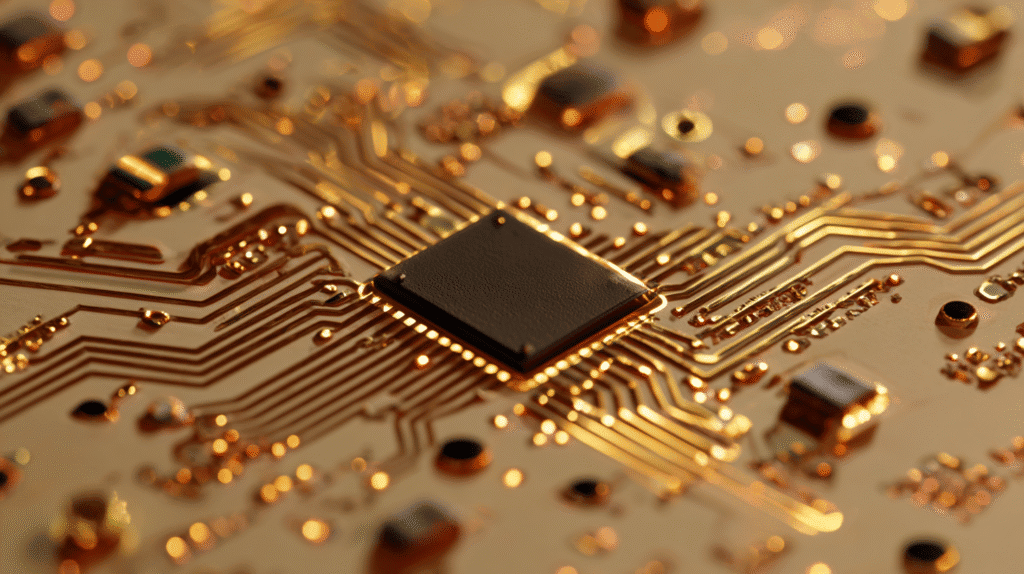
A microcontroller (MCU) is a compact integrated circuit containing a processor core, memory, and programmable input/output peripherals on a single chip. This integration distinguishes microcontrollers from microprocessors, which require external memory and peripherals.
Microcontrollers are optimized for embedded control applications rather than general computing, offering:
Integration: All essential components on single chip reduces part count, board space, and cost while improving reliability.
Cost Effectiveness: Mass production and high integration make microcontrollers extremely economical—some costing mere pennies while providing significant computational capability.
Low Power Consumption: Designed for energy efficiency, many microcontrollers operate for years on small batteries. Advanced power management enables sleep modes consuming microamperes.
Rich Peripheral Sets: Built-in timers, PWM generators, communication interfaces, ADCs, and other peripherals eliminate external components, simplifying designs.
Development Ecosystem: Comprehensive toolchains, libraries, and development boards accelerate application development.
Microcontroller Families and Architectures
The microcontroller landscape encompasses diverse architectures optimized for different applications:
8-bit Microcontrollers:
- Examples: AVR (Arduino), PIC (Microchip), 8051 (legacy but widespread)
- Characteristics: Simple architecture, low cost, adequate for basic control tasks
- Applications: Simple appliances, toys, basic sensors, legacy systems
- Advantages: Extremely low cost, simple programming, minimal power consumption
16-bit Microcontrollers:
- Examples: MSP430 (Texas Instruments), PIC24 (Microchip)
- Characteristics: Balance between simplicity and capability
- Applications: Portable medical devices, industrial sensors, battery-powered equipment
- Advantages: Ultra-low power consumption, good peripheral integration
32-bit Microcontrollers:
- Examples: ARM Cortex-M series (STM32, NXP, Nordic), ESP32, PIC32
- Characteristics: High performance, sophisticated peripherals, often wireless capability
- Applications: IoT devices, automotive systems, industrial control, consumer electronics
- Advantages: Processing power for complex algorithms, connectivity options, rich ecosystems
Specialized Microcontrollers:
- Digital Signal Processors (DSPs): Optimized for signal processing—audio, communications, motor control
- Automotive Microcontrollers: AEC-Q100 qualified for automotive temperature ranges and reliability
- Safety-Critical MCUs: Built-in redundancy and diagnostics for medical, aerospace, automotive safety applications
- Secure Microcontrollers: Hardware-based security features for payment systems, authentication, cryptography
The ARM Cortex-M Dominance
ARM Cortex-M processors have become the dominant 32-bit microcontroller architecture, with billions of devices shipped annually:
Cortex-M0/M0+: Ultra-low-power, cost-optimized for simple applications. Single-cycle I/O, minimal gate count, extremely energy efficient.
Cortex-M3: Balanced performance and efficiency. Comprehensive instruction set, good interrupt handling, widely adopted across industries.
Cortex-M4/M4F: Adds DSP instructions and optional floating-point unit (FPU). Ideal for motor control, audio processing, and sensor fusion.
Cortex-M7: High-performance variant with cache, branch prediction, and advanced peripherals. Approaches microprocessor performance while maintaining microcontroller integration and efficiency.
Cortex-M33/M35P: Latest generation adding security extensions (TrustZone) and improved efficiency. Designed for secure IoT applications.
ARM’s licensing model enables diverse semiconductor vendors to incorporate Cortex-M cores in their microcontrollers, creating a vast ecosystem of compatible devices with varied peripheral sets, price points, and specializations.
Real-Time Operating Systems: Managing Complexity
The Need for RTOSes
Simple embedded applications run “bare-metal” firmware executing in infinite loops without operating systems. However, complex systems benefit from Real-Time Operating Systems (RTOS) providing:
Multitasking: Run multiple functions concurrently—managing communication while processing sensor data, updating displays, and controlling actuators. RTOS handles task scheduling, ensuring all functions receive appropriate processor time.
Deterministic Timing: Guarantees that high-priority tasks respond within specified deadlines. Critical for applications with real-time requirements—automotive control, industrial automation, medical devices.
Resource Management: Manages shared resources (memory, peripherals, communication channels) preventing conflicts and ensuring data integrity.
Inter-Task Communication: Provides message queues, semaphores, event flags, and other mechanisms enabling tasks to exchange data and coordinate activities safely.
Memory Protection: Advanced RTOSes offer memory protection preventing tasks from corrupting each other’s data or code—crucial for safety-critical applications.
Popular RTOS Options
FreeRTOS: Open-source, widely adopted, excellent documentation, minimal resource requirements. Supported across vast range of microcontrollers. Now maintained by Amazon with enhanced cloud integration.
Zephyr: Linux Foundation project, scalable from tiny microcontrollers to application processors. Strong IoT focus with comprehensive connectivity stacks.
Azure RTOS (ThreadX): Microsoft’s offering, optimized for IoT with cloud integration. Safety certified (IEC 61508, IEC 62304) for medical and industrial applications.
QNX: Commercial RTOS with hard real-time guarantees. Dominant in automotive (infotainment, ADAS) and medical devices. Full POSIX compatibility.
VxWorks: Industrial-grade RTOS for aerospace, defense, and industrial automation. Decades of proven reliability in mission-critical applications.
RIOT: Open-source, designed specifically for IoT, low memory footprint, extensive networking support.
The choice depends on real-time requirements, safety certification needs, ecosystem support, licensing costs, and technical capabilities.
Development Tools and Platforms
Integrated Development Environments (IDEs)
Modern embedded development relies on sophisticated toolchains:
Vendor-Specific IDEs:
- STM32CubeIDE (STMicroelectronics)
- MPLAB X (Microchip)
- Code Composer Studio (Texas Instruments)
- MCUXpresso (NXP)
These provide graphical configuration tools, hardware abstraction layers, and optimized libraries simplifying development for specific microcontroller families.
Third-Party IDEs:
- IAR Embedded Workbench: Professional-grade IDE with excellent code optimization and debugging
- Keil MDK-ARM: Popular for ARM development, strong debugging capabilities
- Segger Embedded Studio: Growing adoption, particularly for Nordic Semiconductor devices
Open-Source Tools:
- Eclipse-based IDEs: Extensible platforms with vast plugin ecosystems
- PlatformIO: Modern, cross-platform IDE supporting hundreds of boards and frameworks
- Arduino IDE: Simplified development environment making embedded accessible to beginners
Hardware Development Platforms
Prototyping Boards accelerate development by providing ready-to-use hardware:
Arduino Ecosystem: Simplified hardware and software making embedded accessible to students, makers, and rapid prototyping. Extensive library ecosystem, though limited for production applications.
Raspberry Pi Pico: ARM Cortex-M0+ microcontroller board from Raspberry Pi Foundation. Excellent performance-to-cost ratio, growing ecosystem.
ESP32/ESP8266: Low-cost Wi-Fi and Bluetooth-enabled microcontrollers from Espressif. Revolutionized IoT development with connectivity at unprecedented price points.
STM32 Discovery and Nucleo Boards: Affordable, professional-grade development platforms with extensive peripheral options and ST’s powerful development tools.
Nordic Development Kits: Premium Bluetooth and cellular IoT platforms with excellent documentation and support.
NXP Freedom and LPCXpresso Boards: Diverse microcontroller families addressing automotive, industrial, and consumer applications.
Debugging and Testing Tools
In-Circuit Debuggers: Hardware tools (J-Link, ST-LINK, PICkit) enabling program download, single-stepping, breakpoints, and variable monitoring. Essential for professional development.
Logic Analyzers: Capture and display digital signals, invaluable for debugging communication protocols and timing issues.
Oscilloscopes: Visualize analog and digital signals, essential for hardware debugging and signal integrity analysis.
Protocol Analyzers: Specialized tools for debugging communication protocols—CAN bus analyzers for automotive, USB analyzers, network packet analyzers.
Simulation Tools: Model system behavior before hardware availability, reducing development risk and accelerating time-to-market.
Applications Across Industries
Consumer Electronics: Everyday Intelligence
Consumer devices contain numerous embedded systems working seamlessly:
Smart Home Devices:
- Thermostats learning user preferences and optimizing energy consumption
- Smart speakers processing voice commands and managing connected homes
- Security cameras detecting motion, recognizing faces, and streaming video
- Smart lighting adjusting color and intensity based on time and mood
- Appliances optimizing washing cycles, cooking temperatures, and energy usage
Wearable Technology:
- Fitness trackers monitoring heart rate, steps, sleep patterns, and activity levels
- Smartwatches running apps, managing notifications, and tracking health metrics
- Medical wearables continuously monitoring vital signs and detecting anomalies
Entertainment Systems:
- Smart TVs processing video, managing apps, and enabling voice control
- Gaming consoles delivering immersive experiences with sophisticated processors
- Digital cameras processing images, managing autofocus, and enabling connectivity
The trend toward smart, connected consumer devices drives demand for powerful, energy-efficient microcontrollers with integrated wireless connectivity.
Automotive: Rolling Computers
Modern vehicles are rolling networks of embedded systems, with luxury cars containing over 150 microcontrollers managing diverse functions:
Powertrain Control:
- Engine control units (ECUs) managing fuel injection, ignition timing, emissions
- Transmission control optimizing gear selection and shift timing
- Hybrid/electric vehicle systems managing battery, motors, and energy recovery
Safety Systems:
- Anti-lock braking systems (ABS) preventing wheel lockup during emergency braking
- Electronic stability control (ESC) maintaining vehicle control during aggressive maneuvers
- Airbag deployment systems detecting collisions and deploying restraints within milliseconds
- Advanced driver assistance systems (ADAS) providing adaptive cruise control, lane keeping, and collision avoidance
Infotainment and Connectivity:
- Head units managing audio, navigation, connectivity, and vehicle settings
- Digital instrument clusters displaying information with customizable layouts
- Vehicle-to-everything (V2X) communication enabling connected vehicle applications
Body Control:
- Power window and door lock controllers
- Climate control systems managing comfort
- Lighting systems with adaptive headlights and ambient interior lighting
Automotive-grade microcontrollers must meet stringent reliability requirements, operating from -40°C to +125°C or higher, withstanding electrical transients, and ensuring functional safety per ISO 26262 standards.
The shift toward electric and autonomous vehicles dramatically increases embedded system complexity, with software managing battery systems, electric powertrains, sensor fusion for perception, and artificial intelligence for autonomous decision-making.
Industrial Automation: Precision and Productivity
Manufacturing and process control rely on embedded systems for efficiency, quality, and safety:
Programmable Logic Controllers (PLCs):
- Industrial computers controlling machinery, assembly lines, and processes
- Ruggedized for harsh environments with industrial I/O and communication protocols
- Programmed using specialized languages (ladder logic, structured text)
Human-Machine Interfaces (HMIs):
- Touch panels enabling operators to monitor and control systems
- Display real-time data, alarms, and system status
- Embedded systems managing graphics, communication, and data logging
Industrial Sensors and Actuators:
- Smart sensors with built-in signal processing and communication
- Intelligent actuators with position feedback and diagnostics
- Distributed I/O systems connecting to industrial networks
Predictive Maintenance Systems:
- Vibration monitors detecting bearing wear
- Thermal imaging identifying electrical issues
- Current monitors detecting motor problems
- Machine learning algorithms predicting failures before occurrence
Industrial IoT (IIoT):
- Connecting machines to cloud platforms for analytics
- Real-time production monitoring and optimization
- Digital twins mirroring physical systems for simulation and prediction
Industrial embedded systems prioritize reliability, real-time performance, and long operational life, often operating continuously for decades in challenging environments.
Healthcare: Life-Critical Computing
Medical devices demand utmost reliability and safety, with embedded systems directly impacting patient health:
Diagnostic Equipment:
- Blood glucose monitors enabling diabetes management
- Blood pressure monitors for cardiovascular health tracking
- Pulse oximeters measuring blood oxygen saturation
- ECG monitors detecting cardiac abnormalities
- Imaging systems (X-ray, ultrasound, MRI) containing sophisticated embedded processors
Therapeutic Devices:
- Pacemakers regulating heart rhythm
- Insulin pumps delivering precise medication doses
- Infusion pumps administering IV medications
- Ventilators managing breathing support
- Defibrillators detecting and correcting life-threatening heart rhythms
Wearable and Portable Medical Devices:
- Continuous glucose monitors tracking blood sugar
- Holter monitors recording cardiac activity over extended periods
- Portable ECG devices enabling home-based cardiac monitoring
Surgical and Hospital Equipment:
- Surgical robots providing minimally invasive procedures
- Patient monitoring systems tracking vital signs
- Medical imaging processing and display systems
Medical embedded systems must meet regulatory requirements (FDA in US, CE marking in Europe) demonstrating safety and effectiveness. Development follows stringent processes with extensive testing, documentation, and validation. Software often follows IEC 62304 medical device software lifecycle processes.
The trend toward connected medical devices enables remote monitoring, telemedicine, and data-driven healthcare, though introducing cybersecurity and privacy challenges requiring careful management.
Aerospace and Defense: Mission-Critical Reliability
Aerospace and defense applications demand ultimate reliability under extreme conditions:
Avionics:
- Flight control systems managing aircraft motion
- Navigation systems providing position and guidance
- Communication systems connecting aircraft with ground control
- Engine control managing thrust and performance
- Cockpit displays presenting flight information
Space Systems:
- Satellite attitude control maintaining orientation
- Power management systems managing solar arrays and batteries
- Communication systems transmitting data to ground stations
- Payload controllers managing sensors and instruments
Defense Systems:
- Weapon guidance systems
- Radar and sensor processing
- Secure communications
- Vehicle control systems
Aerospace embedded systems face unique challenges: radiation hardening for space applications, extreme temperature ranges, vibration and shock resistance, and ultra-high reliability requirements. Software development follows DO-178C standards for aviation software, ensuring the highest levels of verification and validation.
Internet of Things: Connecting the World
IoT represents embedded systems’ fastest-growing application area, connecting billions of devices:
Smart Cities:
- Traffic management systems optimizing flow and reducing congestion
- Smart parking systems guiding drivers to available spaces
- Environmental monitoring measuring air quality, noise, temperature
- Smart streetlights adjusting brightness based on conditions and saving energy
Agriculture:
- Soil moisture sensors optimizing irrigation
- Weather stations providing hyperlocal forecasts
- Livestock monitoring tracking animal health and location
- Automated feeding and milking systems
Energy Management:
- Smart meters enabling dynamic pricing and consumption monitoring
- Grid monitoring systems detecting outages and optimizing distribution
- Renewable energy systems managing solar panels and wind turbines
- Building automation optimizing heating, cooling, and lighting
Asset Tracking and Logistics:
- GPS trackers monitoring shipment location
- Temperature sensors ensuring cold chain integrity
- Vibration monitors detecting handling damage
- RFID systems managing inventory
Environmental Monitoring:
- Water quality sensors detecting contamination
- Air quality monitors tracking pollution
- Seismic sensors detecting earthquakes
- Wildlife tracking studying migration and behavior
IoT embedded systems require low power consumption (often battery-powered for years), wireless connectivity (cellular, LoRaWAN, NB-IoT, Zigbee), security (protecting against cyber threats), and remote management (firmware updates, configuration changes).
Design Challenges and Considerations
Power Management: Operating on Minimal Energy
Power consumption is often the dominant design constraint, particularly for battery-powered devices:
Active Power Reduction:
- Clock frequency scaling based on workload
- Voltage scaling coordinated with frequency
- Peripheral power management (disabling unused features)
- DMA reducing processor intervention
Sleep Modes:
- Light sleep maintaining RAM contents, quick wakeup
- Deep sleep retaining only essential state
- Hibernation modes storing state to non-volatile memory
Energy Harvesting:
- Solar panels for outdoor devices
- Thermoelectric generators from temperature differentials
- Piezoelectric generators from vibration
- RF energy harvesting from ambient signals
Achieving years of battery life requires holistic power optimization—hardware selection, firmware optimization, and system architecture all contributing to energy efficiency.
Real-Time Constraints: Meeting Deadlines
Many embedded systems have hard real-time requirements where missing deadlines causes system failure:
Deterministic Behavior: System must respond within guaranteed time bounds. Requires careful analysis of worst-case execution times, interrupt latencies, and resource contention.
Priority Management: Higher-priority tasks must preempt lower-priority tasks. Priority inversion (low-priority task blocking high-priority) requires prevention through priority inheritance or ceiling protocols.
Resource Allocation: Ensuring sufficient processing capacity, memory, and I/O bandwidth for all tasks under worst-case conditions.
Timing Analysis: Formal methods proving system meets timing requirements. Rate-monotonic analysis and other techniques provide mathematical guarantees.
Testing: Stress testing under worst-case conditions ensuring deadlines are met even under maximum load.
Real-time systems design requires careful architecture, disciplined development, and thorough analysis—mistakes can have serious consequences in safety-critical applications.
Memory Limitations: Doing More with Less
Embedded systems typically operate with constrained memory:
Code Size Optimization:
- Compiler optimization settings balancing size and speed
- Selective feature inclusion (eliminating unused code)
- Code refactoring for density
- Using compressed data structures
RAM Management:
- Static allocation eliminating fragmentation
- Careful buffer sizing
- Shared buffers for multiple purposes
- Stack size analysis preventing overflow
Data Storage:
- Efficient data structures
- Compression algorithms
- Wear leveling for Flash memory
- Circular buffers for continuous data streams
Successful embedded development requires understanding memory constraints from project inception, not attempting to fit bloated software into inadequate memory late in development.
Security: Protecting Connected Devices
Cybersecurity is increasingly critical as embedded systems connect to networks:
Secure Boot: Cryptographically verifying firmware authenticity before execution prevents malware installation.
Encrypted Communication: TLS/SSL or equivalent protocols protecting data in transit.
Secure Storage: Protecting sensitive data (keys, credentials) in tamper-resistant memory.
Authentication: Verifying device identity and user authorization.
Firmware Updates: Secure mechanisms for updating software while preventing malicious code installation.
Physical Security: Protecting against tampering, probing, and side-channel attacks.
Security Throughout Lifecycle: From design through deployment and decommissioning, security must be considered at every stage.
IoT device compromises create botnets, leak sensitive data, or enable physical attacks. Security cannot be an afterthought but must be integral to system architecture.
Reliability and Fault Tolerance
Embedded systems often must operate reliably for years in harsh conditions:
Hardware Redundancy: Dual processors, redundant sensors, and backup power supplies provide fault tolerance.
Software Fault Detection: Watchdog timers, memory checks, and runtime diagnostics detecting failures.
Error Correction: ECC memory detecting and correcting bit errors, CRC checking communication integrity.
Graceful Degradation: Continuing operation with reduced functionality rather than complete failure.
Environmental Hardening: Conformal coating, sealed enclosures, and thermal management protecting electronics from environmental stresses.
Testing: Extensive testing under temperature extremes, vibration, humidity, and electromagnetic interference.
Reliability engineering requires understanding failure modes, designing defenses, and validating through rigorous testing.
Emerging Trends and Future Directions
Edge AI: Intelligence at the Source
Artificial intelligence is moving from cloud to edge devices:
TinyML: Machine learning algorithms running on microcontrollers enable local inference without cloud connectivity. Applications include voice recognition, gesture detection, anomaly detection, and predictive maintenance.
Neural Processing Units: Specialized hardware accelerators enabling efficient neural network inference. Some microcontrollers now integrate dedicated ML accelerators.
Model Optimization: Quantization, pruning, and knowledge distillation reducing model size and computational requirements for deployment on resource-constrained devices.
Benefits: Reduced latency, improved privacy, continued operation without connectivity, reduced bandwidth and cloud costs.
Challenges: Limited computational resources, model optimization complexity, development tool maturity.
Edge AI enables new applications impossible with cloud-dependent systems—real-time processing, privacy-sensitive applications, and remote installations without reliable connectivity.
Ultra-Low-Power and Energy Harvesting
Energy efficiency continues advancing, enabling new applications:
Sub-Threshold Operation: Operating transistors below traditional voltage thresholds achieving nano-watt power consumption.
Event-Driven Architectures: Components sleep until events occur, eliminating polling overhead.
Advanced Power Management: Granular control of individual functional blocks, adaptive voltage scaling, and intelligent wake-up strategies.
Energy Harvesting Integration: Microcontrollers with integrated power management for solar, thermoelectric, or vibration energy harvesting.
Batteryless Operation: Devices operating entirely on harvested energy or using supercapacitors for short-term storage.
These advances enable maintenance-free sensors operating for decades, wireless sensor networks without battery replacement, and truly disposable sensing devices.
Wireless Connectivity Evolution
Wireless communication is integral to modern embedded systems:
5G and Beyond: Higher bandwidth, lower latency, and massive device connectivity enabling new IoT applications.
LPWAN (Low-Power Wide-Area Networks): Technologies like LoRaWAN, NB-IoT, and LTE-M enabling long-range, low-power communication for IoT devices.
Wi-Fi 6/6E: Improved efficiency and capacity for dense device environments.
Bluetooth 5.x: Enhanced range, throughput, and mesh networking for IoT applications.
Ultra-Wideband (UWB): Precise ranging and positioning for location-based applications.
Thread and Matter: Unified standards for smart home devices improving interoperability.
Wireless connectivity transforms isolated embedded systems into nodes in vast networks, enabling new applications and business models.
Security Enhancements
Security features are becoming standard in microcontrollers:
Hardware Security Modules: Dedicated security processors handling cryptography, key management, and secure boot.
Trusted Execution Environments: Isolation ensuring sensitive code and data are protected from compromise.
Physical Unclonable Functions (PUFs): Hardware-based device identity impossible to clone.
Secure Debugging: Protecting intellectual property and security during development and testing.
Lifecycle Management: Secure provisioning, updates, and decommissioning throughout device lifetime.
Regulatory requirements (EU Cyber Resilience Act, IoT security mandates) are driving security adoption, making it essential rather than optional.
Open-Source Hardware and Software
Open-source ecosystems are democratizing embedded development:
Hardware Platforms: Arduino, ESP32, and RISC-V processors providing accessible, well-documented platforms.
Software Frameworks: Zephyr, FreeRTOS, and platform-specific libraries accelerating development.
Development Tools: GCC compiler toolchains, OpenOCD debuggers, and open-source IDEs eliminating licensing costs.
Community Support: Forums, tutorials, and libraries sharing knowledge and accelerating learning.
Open-source approaches reduce barriers to entry, enabling students, startups, and makers to create sophisticated embedded systems.
Formal Methods and Safety Certification
Safety-critical applications increasingly employ formal verification:
Model-Based Development: Tools like Simulink and SCADE generating code from verified models.
Static Analysis: Automated tools detecting bugs, security vulnerabilities, and standard violations.
Formal Verification: Mathematical proofs that software meets specifications.
Certification Standards: ISO 26262 (automotive), DO-178C (avionics), IEC 61508 (industrial), IEC 62304 (medical) providing frameworks for safety-critical development.
These approaches provide higher assurance levels than traditional testing alone, essential for applications where failures have serious consequences.
Additional Resources
For those interested in exploring embedded systems further, Embedded.com provides technical articles and industry news. The Embedded Systems Conference (ESC) offers conferences and training covering the latest developments in the field.
Conclusion: The Invisible Revolution
Embedded systems and microcontrollers represent one of technology’s most significant yet least visible transformations. They’ve evolved from simple control circuits to sophisticated computing platforms incorporating AI, wireless connectivity, and advanced security—all while maintaining the efficiency, reliability, and cost-effectiveness that make ubiquitous deployment practical.
The numbers are staggering: tens of billions of microcontrollers shipped annually, embedded systems in virtually every modern product, and market projections showing continued exponential growth driven by IoT, automotive electrification, industrial automation, and smart infrastructure.
Yet embedded systems’ greatest impact isn’t measured in units shipped but in capabilities enabled: vehicles that prevent accidents, medical devices that save lives, industrial systems that improve productivity, smart grids that integrate renewable energy, and IoT networks that optimize resource usage. These systems make modern life safer, more efficient, and more connected.
Looking forward, several trends seem clear: AI moving to the edge will enable smarter devices responding in real-time; ultra-low-power innovations will enable maintenance-free sensors operating for decades; advanced connectivity will integrate billions of devices into cohesive systems; and enhanced security will protect against growing cyber threats. The specific technologies will evolve, but the fundamental trajectory toward more capable, efficient, and ubiquitous embedded systems appears certain.
For engineers and developers, embedded systems offer exciting challenges—pushing technological boundaries while working within constrained resources, balancing competing requirements, and creating systems operating reliably for years in challenging environments. The field combines hardware and software, digital and analog, computer science and electrical engineering in ways demanding diverse knowledge and creative problem-solving.
For businesses, embedded systems enable product differentiation, new capabilities, and business models. Companies that effectively leverage embedded intelligence, connectivity, and data analytics gain competitive advantages. Early adopters of emerging technologies—edge AI, advanced connectivity, secure architectures—position themselves for future success.
For society, the embedded systems transformation raises important questions about privacy, security, sustainability, and human autonomy in increasingly automated environments. Addressing these concerns thoughtfully will determine whether embedded intelligence enhances or diminishes human flourishing.
The microcontrollers and embedded systems operating invisibly in devices throughout your environment represent humanity’s remarkable ability to create technologies that fade into the background while fundamentally transforming capabilities. They’re not the dramatic, headline-grabbing innovations but the quiet, essential foundations enabling the connected, automated, intelligent world being built around us—one embedded system at a time, one line of firmware at a time, silently revolutionizing how technology serves humanity.