Table of Contents
Introduction to Composite Layering Optimization
Composite layering techniques represent a cornerstone of modern engineering, enabling the construction of structures that combine exceptional strength with reduced weight. These advanced manufacturing methods have revolutionized industries ranging from aerospace and automotive to marine engineering and civil construction. By strategically combining different materials in precise configurations, engineers can create composite structures that outperform traditional monolithic materials in virtually every performance metric.
The optimization of composite layering techniques is not merely an academic exercise—it directly impacts the safety, longevity, and performance of critical infrastructure and vehicles. When properly executed, optimized composite layering can reduce material costs, extend service life, improve fuel efficiency in transportation applications, and enable designs that would be impossible with conventional materials. Understanding the principles, methodologies, and best practices for composite layering optimization is essential for engineers, designers, and manufacturers working with advanced materials.
This comprehensive guide explores the fundamental concepts of composite materials, examines proven optimization techniques, and provides actionable insights for achieving enhanced structural integrity through strategic layering approaches. Whether you're designing aircraft components, automotive parts, wind turbine blades, or architectural elements, the principles outlined here will help you maximize the performance potential of composite materials.
Fundamentals of Composite Materials and Layering
What Are Composite Materials?
Composite materials are engineered substances created by combining two or more constituent materials with significantly different physical or chemical properties. When combined, these materials produce a final product with characteristics different from the individual components. The constituent materials remain separate and distinct within the finished structure, differentiating composites from alloys and other homogeneous materials.
Most structural composites consist of two primary components: a reinforcement phase and a matrix phase. The reinforcement, typically in the form of fibers or particles, provides strength and stiffness. The matrix, usually a polymer resin but sometimes metal or ceramic, binds the reinforcement together, transfers loads between fibers, and protects the reinforcement from environmental damage. This synergistic relationship allows composites to achieve properties that neither component could deliver independently.
Common Types of Composite Materials
The composite materials landscape encompasses several distinct categories, each with unique characteristics and applications. Fiber-reinforced polymers (FRP) represent the most widely used composite type, incorporating glass, carbon, aramid, or natural fibers within polymer matrices such as epoxy, polyester, or vinyl ester resins. These materials offer exceptional strength-to-weight ratios and design flexibility.
Metal matrix composites (MMC) utilize metallic matrices reinforced with ceramic particles or fibers, delivering high-temperature performance and wear resistance. Ceramic matrix composites (CMC) combine ceramic reinforcements with ceramic matrices, providing extreme temperature tolerance and oxidation resistance for aerospace and energy applications. Hybrid composites incorporate multiple reinforcement types within a single matrix, allowing engineers to tailor properties for specific performance requirements.
The Science of Layering in Composites
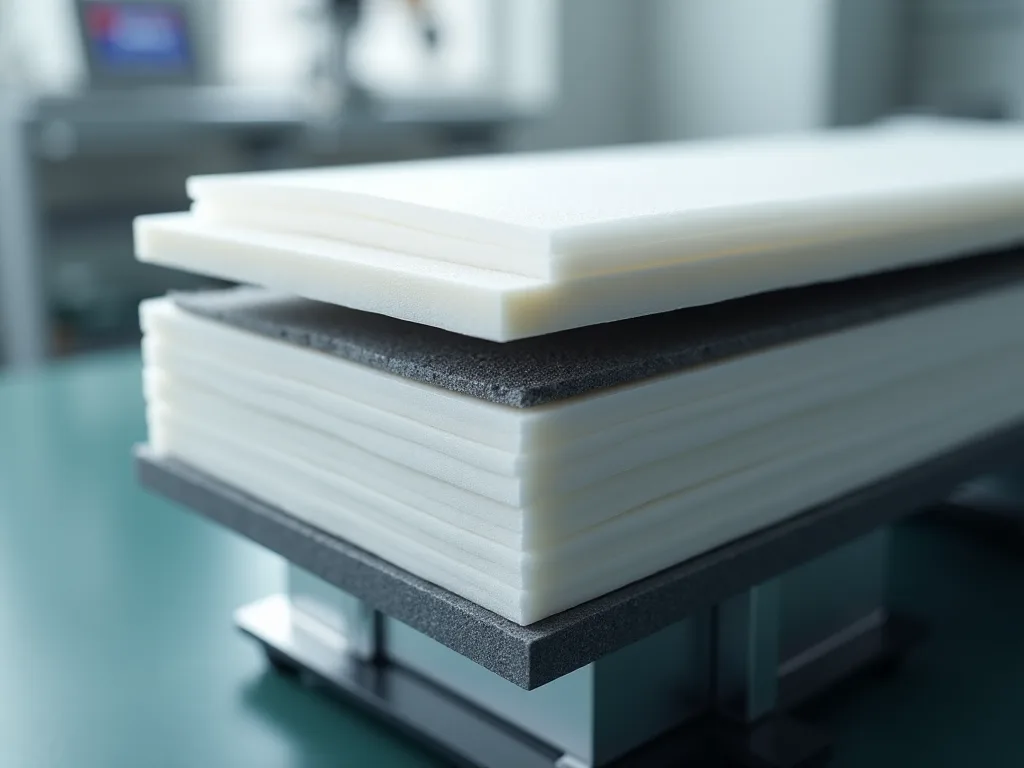
Layering, also known as lamination, involves stacking multiple plies or layers of composite material in predetermined orientations to create a laminate structure. Each individual layer, called a lamina or ply, consists of reinforcing fibers embedded in a matrix material. The fibers within each ply are typically aligned in a specific direction, and by varying these orientations across multiple layers, engineers can create structures that resist loads from multiple directions.
The mechanical properties of a composite laminate depend heavily on the stacking sequence—the order and orientation of individual plies. A laminate designated as [0/45/90/-45]s, for example, contains plies oriented at 0 degrees, 45 degrees, 90 degrees, and -45 degrees, with the "s" indicating a symmetric arrangement about the midplane. This symmetry is crucial for preventing unwanted coupling effects such as bending-twisting interactions that can compromise structural performance.
The thickness of individual plies, the total number of layers, and the proportion of fibers oriented in each direction all contribute to the final mechanical properties. Thicker laminates generally provide greater strength and stiffness but add weight and cost. The art and science of composite design involve finding the optimal balance between performance requirements, manufacturing constraints, and economic considerations.
Key Factors Influencing Structural Integrity
Material Selection and Compatibility
The foundation of any successful composite structure begins with appropriate material selection. Fiber choice significantly impacts mechanical properties, with carbon fibers offering superior stiffness and strength, glass fibers providing cost-effectiveness and good all-around performance, and aramid fibers delivering exceptional impact resistance and toughness. Natural fibers such as flax, hemp, and bamboo are gaining attention for sustainable applications, though they typically offer lower performance than synthetic alternatives.
Matrix selection must consider the operating environment, processing requirements, and compatibility with chosen reinforcements. Epoxy resins provide excellent mechanical properties and chemical resistance, making them ideal for aerospace and high-performance applications. Polyester resins offer lower cost and easier processing for marine and construction uses. Vinyl ester resins bridge the gap between epoxy and polyester, delivering good corrosion resistance for chemical processing equipment and infrastructure.
Material compatibility extends beyond simple fiber-matrix adhesion. Thermal expansion coefficients must be reasonably matched to prevent internal stresses during temperature cycling. Chemical compatibility ensures that neither component degrades the other during processing or service. Moisture absorption characteristics affect dimensional stability and long-term durability, particularly in humid or marine environments.
Fiber Orientation and Directionality
Fiber orientation represents one of the most powerful tools for optimizing composite performance. Unidirectional composites, with all fibers aligned in a single direction, exhibit maximum strength and stiffness along the fiber axis but minimal properties in transverse directions. This anisotropic behavior allows designers to place strength precisely where needed, but it also requires careful analysis to ensure adequate performance in all loading directions.
Common fiber orientations include 0-degree plies aligned with the primary load direction, 90-degree plies providing transverse strength, and ±45-degree plies resisting shear loads and providing torsional stiffness. Quasi-isotropic laminates, typically using [0/±45/90] orientations in equal proportions, approximate the behavior of isotropic materials while retaining the weight advantages of composites. The specific combination depends on the anticipated load spectrum and failure modes.
Advanced applications may employ variable-angle tow placement, where fiber orientation changes continuously across a component's surface. This technique, enabled by automated fiber placement machines, allows unprecedented optimization for complex loading conditions but requires sophisticated design tools and manufacturing capabilities.
Stacking Sequence and Symmetry
The stacking sequence—the specific order of ply orientations through the laminate thickness—profoundly affects structural behavior. Symmetric laminates, where the stacking sequence mirrors itself about the midplane, eliminate bending-extension coupling that can cause warping during manufacturing or unexpected deformations under load. Most structural applications employ symmetric laminates to ensure predictable behavior and dimensional stability.
Balanced laminates contain equal numbers of +θ and -θ plies, preventing shear-extension coupling that can lead to twisting under axial loads. Combining symmetry and balance provides the most stable and predictable laminate configurations for general structural applications. However, specialized applications may intentionally use unsymmetric or unbalanced laminates to achieve specific coupling effects, such as bend-twist coupling in helicopter rotor blades or wind turbine blades for load alleviation.
Ply clustering—placing multiple plies of the same orientation adjacent to each other—can create stress concentrations and increase susceptibility to delamination. Dispersing ply orientations throughout the thickness generally improves damage tolerance and fatigue resistance. The "10% rule" suggests that no more than four consecutive plies should share the same orientation in thick laminates, though this guideline varies with specific applications and materials.
Interface Quality and Interlaminar Strength
The interfaces between individual plies represent potential weak points in composite structures. Delamination—the separation of adjacent plies—is one of the most common failure modes in laminated composites, particularly under impact loading or in the presence of manufacturing defects. Interlaminar strength depends on matrix properties, fiber-matrix adhesion, and the quality of bonding between successive plies.
Surface preparation and contamination control during layup are critical for achieving strong interlaminar bonds. Moisture, oils, release agents, or other contaminants can prevent proper adhesion between plies. Processing parameters such as temperature, pressure, and cure time must be carefully controlled to ensure complete matrix consolidation and void-free interfaces.
Through-thickness reinforcement techniques, including z-pinning and stitching, can significantly improve interlaminar strength and damage tolerance. These methods insert reinforcements perpendicular to the ply plane, creating mechanical interlocking that resists delamination. While they may slightly reduce in-plane properties and add manufacturing complexity, the improvements in damage tolerance often justify their use in critical applications.
Advanced Optimization Techniques
Classical Lamination Theory
Classical Lamination Theory (CLT) provides the mathematical framework for predicting the mechanical behavior of composite laminates. This analytical approach combines the properties of individual plies with their orientations and positions within the laminate to calculate overall stiffness and strength. CLT enables engineers to evaluate countless stacking sequences quickly, identifying promising configurations before committing to expensive prototyping and testing.
The theory begins with characterizing individual ply properties, including longitudinal and transverse moduli, shear modulus, and Poisson's ratios. Transformation equations rotate these properties to account for ply orientation, and integration through the thickness yields the laminate stiffness matrix. This matrix relates applied loads and moments to resulting strains and curvatures, enabling prediction of structural response under various loading conditions.
While CLT makes simplifying assumptions—such as perfect bonding between plies and linear elastic behavior—it provides remarkably accurate predictions for many practical applications. Its computational efficiency makes it ideal for preliminary design and optimization studies. More sophisticated analyses, including finite element methods, can refine predictions for complex geometries or loading conditions once promising designs are identified.
Computational Optimization Methods
Modern composite optimization leverages computational algorithms to search vast design spaces for optimal configurations. Genetic algorithms mimic biological evolution, creating populations of candidate designs, evaluating their fitness against objective functions, and breeding successive generations that progressively improve performance. These methods excel at finding global optima in complex, multi-modal design spaces where traditional gradient-based methods might become trapped in local minima.
Gradient-based optimization uses sensitivity information to efficiently navigate toward optimal solutions. These methods work well for continuous design variables and convex design spaces but may struggle with discrete variables like ply orientations or the presence of multiple local optima. Hybrid approaches combining genetic algorithms for global exploration with gradient methods for local refinement often deliver the best results.
Multi-objective optimization addresses the reality that composite design involves competing objectives—maximizing strength while minimizing weight, for example, or balancing performance against manufacturing cost. Pareto optimization identifies the set of non-dominated solutions where improving one objective necessarily degrades another, allowing designers to make informed trade-offs based on application priorities.
Machine learning techniques are increasingly applied to composite optimization, using neural networks trained on databases of analyzed configurations to rapidly predict performance of new designs. These surrogate models can reduce computational time by orders of magnitude, enabling real-time optimization during the design process. For more information on advanced computational methods, visit the CompositesWorld resource library.
Failure Criteria and Safety Factors
Predicting failure in composite materials requires more sophisticated approaches than the simple yield criteria used for metals. The anisotropic nature of composites and their multiple potential failure modes—fiber breakage, matrix cracking, fiber-matrix debonding, and delamination—necessitate specialized failure theories. Common approaches include the maximum stress criterion, maximum strain criterion, Tsai-Wu criterion, and Hashin criterion, each with different assumptions and applicability ranges.
The maximum stress and maximum strain criteria evaluate each stress or strain component independently against allowable values, predicting failure when any component exceeds its limit. While simple to implement, these criteria ignore interactions between stress components. Interactive criteria like Tsai-Wu incorporate these interactions through polynomial failure surfaces, providing more accurate predictions for combined loading conditions.
Progressive damage analysis tracks the accumulation of damage under increasing load, degrading material properties as individual failure modes occur. This approach captures the gradual nature of composite failure and can predict ultimate strength more accurately than first-ply failure criteria. However, it requires detailed material characterization and significant computational resources.
Safety factors for composite structures must account for greater material variability and less extensive service experience compared to metals. Typical factors range from 1.5 to 2.5 depending on application criticality, loading predictability, and quality control capabilities. Aerospace applications often employ building-block testing approaches, progressively validating materials, elements, subcomponents, and full-scale structures to reduce uncertainty and justify lower safety factors.
Topology Optimization for Composite Structures
Topology optimization determines the optimal material distribution within a design space, identifying where material should be placed and where it can be removed. When applied to composites, this technique can simultaneously optimize both material layout and fiber orientations, creating structures that efficiently channel loads through optimized fiber paths. The resulting designs often exhibit organic, nature-inspired forms that would be difficult to conceive through traditional design approaches.
Density-based topology optimization represents material presence with continuous variables ranging from void to solid, allowing gradient-based optimization algorithms to efficiently explore the design space. Filtering techniques prevent checkerboard patterns and ensure manufacturable minimum feature sizes. Post-processing interprets the continuous density field as a discrete structure suitable for manufacturing.
Level-set methods represent structural boundaries explicitly, maintaining crisp interfaces throughout optimization. This approach naturally produces smooth, well-defined geometries but requires more sophisticated numerical implementations. Evolutionary structural optimization progressively removes inefficiently stressed material, mimicking biological adaptation processes to arrive at optimized forms.
Manufacturing constraints must be incorporated into topology optimization for composites, ensuring that optimized designs can actually be fabricated. Constraints on fiber continuity, minimum bend radii, draft angles for molding, and accessibility for layup tools keep optimization results within the realm of practical manufacturing. Additive manufacturing technologies are expanding the feasible design space, enabling production of complex geometries that would be impossible with traditional composite manufacturing methods.
Manufacturing Considerations for Optimal Layering
Hand Layup and Manual Processes
Hand layup remains one of the most versatile and widely used composite manufacturing methods, particularly for low-volume production, large structures, and complex geometries. The process involves manually placing dry reinforcement fabrics or pre-impregnated materials onto a mold surface, building up the laminate layer by layer. While labor-intensive, hand layup offers unmatched flexibility for customization and requires relatively low capital investment.
Quality in hand layup depends heavily on operator skill and attention to detail. Proper fiber wetting, complete air removal, and accurate ply placement are critical for achieving design properties. Consolidation rollers or squeegees remove entrapped air and excess resin, while careful attention to fiber orientation ensures that each ply is placed according to the specified stacking sequence. Documentation and inspection at each stage help maintain quality control and traceability.
Vacuum bagging enhances hand layup by applying uniform consolidation pressure and removing volatiles during cure. A flexible vacuum bag sealed around the laminate perimeter allows atmospheric pressure to compress the laminate when vacuum is applied. Breather fabrics absorb excess resin, while release films prevent the laminate from bonding to bagging materials. This technique significantly improves fiber volume fraction, reduces voids, and produces more consistent properties compared to contact molding alone.
Automated Fiber Placement and Tape Laying
Automated fiber placement (AFP) and automated tape laying (ATL) represent the state-of-the-art in composite manufacturing, offering precision, repeatability, and productivity impossible to achieve manually. These computer-controlled systems deposit pre-impregnated tows or tapes onto mold surfaces following programmed paths, building up laminates with exceptional accuracy and consistency. While requiring substantial capital investment, automated systems deliver superior quality and economic advantages for medium to high-volume production.
AFP systems typically place multiple narrow tows simultaneously, allowing tight steering radii and the ability to create variable-angle fiber paths. This capability enables optimization strategies impossible with traditional fixed-angle plies, placing fibers along principal stress directions that vary across a component's surface. Tow drop-off and add-on capabilities allow thickness variation and local reinforcement without separate operations.
ATL systems place wider tapes, typically 75mm to 300mm, making them ideal for large, relatively flat structures like aircraft fuselage panels and wind turbine blades. Higher deposition rates compared to AFP reduce manufacturing time for large components, though the wider tapes limit steering capability and conformability to complex contours. Both technologies incorporate in-process inspection systems that detect gaps, overlaps, and placement errors, ensuring consistent quality.
Process parameters including temperature, compaction pressure, and deposition speed must be carefully controlled to achieve proper tack and consolidation. Laser or hot gas heating systems soften the incoming material and substrate surface, promoting adhesion between successive layers. Real-time monitoring and closed-loop control systems adjust parameters to maintain optimal processing conditions despite variations in material properties or environmental conditions.
Resin Infusion Processes
Resin infusion processes separate reinforcement placement from resin introduction, offering advantages for large structures and improved worker safety by minimizing exposure to uncured resins. Vacuum-assisted resin transfer molding (VARTM), also called vacuum infusion, places dry reinforcement fabrics on a mold, covers them with a vacuum bag, and draws liquid resin through the fiber preform under vacuum pressure. This approach produces high-quality laminates with excellent fiber wet-out and low void content.
Flow media and distribution channels ensure uniform resin distribution across large or complex parts. Perforated release films and flow enhancement fabrics create preferential flow paths that fill the mold quickly and completely. Strategic placement of resin inlet and vacuum outlet ports, informed by flow simulation software, prevents dry spots and ensures complete fiber wet-out. Resin viscosity, infusion pressure, and fabric permeability must be balanced to achieve complete infusion before resin gelation.
Resin transfer molding (RTM) uses matched metal molds and positive injection pressure, enabling higher fiber volume fractions and better dimensional control than vacuum infusion. The closed mold environment produces parts with two finished surfaces and allows use of faster-curing resin systems. However, RTM requires more expensive tooling and careful process control to prevent race-tracking, incomplete filling, or excessive injection pressures that could distort the mold or damage reinforcements.
Cure Cycles and Process Control
The cure cycle—the time-temperature-pressure profile applied during composite processing—critically affects final properties, residual stresses, and dimensional accuracy. Thermoset resins undergo complex chemical reactions during cure, transforming from viscous liquids to solid, cross-linked networks. The cure cycle must provide sufficient time at appropriate temperatures for complete cross-linking while managing exothermic heat generation and minimizing residual stresses from thermal expansion mismatch.
Autoclave processing applies elevated temperature and pressure in a pressurized oven, producing the highest-quality laminates with minimal voids and maximum fiber volume fraction. Typical aerospace cure cycles involve heating to 120-180°C under 0.6-0.7 MPa pressure, holding for several hours to complete cure, then controlled cooling. Multiple temperature holds may be specified to manage exotherms in thick laminates or achieve specific resin advancement states.
Out-of-autoclave (OOA) prepregs and processes reduce manufacturing costs by eliminating expensive autoclave equipment and energy consumption. These materials cure under vacuum bag pressure alone, using specially formulated resins with extended flow characteristics and breathable bagging materials that allow air and volatiles to escape. While OOA processes may produce slightly higher void contents than autoclave curing, modern materials achieve properties approaching autoclave-cured laminates for many applications.
Process monitoring using embedded sensors provides real-time feedback on cure progression and part quality. Thermocouples track temperature distribution, detecting hot spots from exothermic reactions or inadequate heating. Dielectric sensors monitor resin viscosity and degree of cure, enabling adaptive process control that adjusts heating rates or hold times based on actual material state rather than predetermined schedules. Fiber optic sensors can measure strain development during cure, identifying potential problems with residual stresses or tool-part interaction.
Quality Control and Inspection Methods
Non-Destructive Testing Techniques
Non-destructive testing (NDT) enables quality verification without damaging parts, making it essential for production inspection and in-service monitoring. Ultrasonic testing uses high-frequency sound waves to detect internal defects such as delaminations, voids, and porosity. Pulse-echo techniques measure reflections from internal interfaces, while through-transmission methods detect attenuation caused by defects. Phased array systems provide detailed three-dimensional imaging of internal structure, enabling precise defect characterization and sizing.
Thermography detects subsurface defects by monitoring surface temperature distributions during heating or cooling. Active thermography applies external heat sources while infrared cameras record thermal response; defects alter heat flow patterns, appearing as temperature anomalies. Flash thermography rapidly heats large areas, enabling fast inspection of aircraft structures and wind turbine blades. Lock-in thermography uses modulated heating for improved sensitivity to small or deep defects.
Radiography using X-rays or gamma rays reveals internal structure and defects through differential absorption. Digital radiography and computed tomography (CT) provide detailed three-dimensional images of complex parts, enabling inspection of intricate geometries and precise defect characterization. However, radiation safety requirements and equipment costs limit radiographic inspection to critical applications or specialized facilities.
Acoustic emission monitoring detects stress waves generated by crack growth, fiber breakage, or delamination during loading. Sensors distributed across a structure locate and characterize damage events in real-time, enabling structural health monitoring during testing or service. This technique provides early warning of damage progression before catastrophic failure occurs.
Destructive Testing and Material Characterization
Destructive testing sacrifices representative samples to verify material properties and validate manufacturing processes. Tensile, compression, and shear tests measure basic mechanical properties, providing data for design analysis and quality control. Standardized test methods ensure consistency and comparability across different materials, manufacturers, and testing laboratories. Organizations like ASTM International and ISO publish widely accepted test standards for composite materials.
Interlaminar shear strength tests evaluate the quality of bonding between plies, detecting manufacturing defects that reduce through-thickness properties. Short-beam shear tests provide quick screening, while more sophisticated methods like double-notch shear or compression-after-impact tests better represent service conditions. Impact testing assesses damage tolerance, measuring energy absorption and residual strength after low-velocity impacts typical of tool drops or runway debris.
Microscopy techniques examine internal structure at various scales. Optical microscopy of polished cross-sections reveals fiber distribution, void content, and ply interfaces. Scanning electron microscopy (SEM) provides high-resolution images of fracture surfaces, identifying failure modes and manufacturing defects. Image analysis software quantifies fiber volume fraction, void content, and fiber orientation distribution, providing statistical quality metrics.
Environmental testing subjects materials to accelerated aging conditions—elevated temperature, humidity, UV exposure, or chemical immersion—to predict long-term durability. Samples are periodically removed and tested to track property degradation over time. This data supports service life predictions and maintenance interval determination for structures exposed to harsh environments.
In-Process Monitoring and Quality Assurance
In-process monitoring detects defects during manufacturing when corrective action is still possible, preventing costly scrap or rework. Automated fiber placement systems incorporate vision systems that inspect each tow as it's placed, detecting gaps, overlaps, twists, or foreign objects. Machine learning algorithms trained on databases of acceptable and defective layups can identify subtle anomalies that might escape human inspection.
Resin flow monitoring during infusion processes uses transparent vacuum bags, flow visualization, or embedded sensors to verify complete wet-out. Pressure transducers at multiple locations track infusion progress and detect flow anomalies that might indicate dry spots or race-tracking. Real-time comparison with flow simulation predictions enables process adjustments before defects become irreversible.
Statistical process control (SPC) tracks key process parameters and quality metrics over time, identifying trends that might indicate developing problems. Control charts flag out-of-specification conditions, triggering investigation and corrective action before significant numbers of defective parts are produced. Design of experiments (DOE) methodologies systematically vary process parameters to identify optimal settings and understand parameter interactions.
Digital manufacturing systems integrate design data, process parameters, inspection results, and quality records in centralized databases. This digital thread enables traceability from raw materials through finished parts, supporting root cause analysis when problems occur and providing documentation for certification and regulatory compliance. Blockchain technologies are being explored to ensure data integrity and prevent tampering with quality records.
Industry-Specific Applications and Case Studies
Aerospace Applications
The aerospace industry has been the primary driver of composite technology development, pushing the boundaries of performance and manufacturing capability. Modern commercial aircraft like the Boeing 787 and Airbus A350 incorporate composite materials for over 50% of structural weight, including primary structures such as fuselage sections and wing boxes. These applications demand the highest levels of quality, reliability, and damage tolerance, driving innovations in materials, design methods, and manufacturing processes.
Aircraft composite structures typically employ carbon fiber-epoxy prepregs cured in autoclaves, achieving fiber volume fractions of 60-65% and void contents below 1%. Stacking sequences are optimized for multiple load cases including flight loads, ground handling, pressurization, and crash scenarios. Damage tolerance requirements mandate that structures maintain adequate strength after barely visible impact damage, driving the use of toughened resin systems and damage-arresting design features.
Weight reduction directly translates to fuel savings and increased payload capacity, making the higher material and manufacturing costs of composites economically justified. A 20% weight reduction compared to aluminum structures is typical, with even greater savings possible for optimized designs. Corrosion resistance eliminates the maintenance burden of metal structures, further improving lifecycle economics. Fatigue resistance superior to aluminum allows longer inspection intervals and extended service life.
Space applications push composite technology even further, with extreme temperature ranges, radiation exposure, and absolute reliability requirements. Launch vehicle structures use carbon-epoxy laminates optimized for axial compression loads, while satellite structures employ ultra-lightweight honeycomb sandwich panels with composite facesheets. Thermal protection systems for reentry vehicles combine ceramic matrix composites with advanced insulation materials, withstanding temperatures exceeding 1500°C.
Automotive and Transportation
Automotive applications of composites balance performance requirements against stringent cost constraints and high-volume production demands. High-performance and luxury vehicles increasingly incorporate carbon fiber components for weight reduction and styling differentiation, while mass-market vehicles use glass fiber composites for semi-structural and cosmetic applications. The challenge lies in achieving automotive cost targets—typically an order of magnitude lower than aerospace—while maintaining adequate quality and performance.
Fast-cure resin systems and high-speed manufacturing processes enable cycle times measured in minutes rather than hours. Compression molding of sheet molding compound (SMC) or prepreg materials produces complex parts in 2-5 minute cycles. High-pressure resin transfer molding (HP-RTM) achieves similar cycle times while offering better surface finish and dimensional control. These processes sacrifice some performance compared to aerospace methods but deliver the productivity required for automotive economics.
Electric vehicles create new opportunities for composites, as weight reduction directly extends driving range and offsets heavy battery packs. The BMW i3 and i8 pioneered carbon fiber passenger cells in mass-produced vehicles, demonstrating that appropriate manufacturing strategies can make advanced composites viable for moderate production volumes. As battery costs decline and weight becomes increasingly critical, composite adoption in electric vehicles is expected to accelerate.
Rail transportation uses composites for interior panels, seats, and increasingly for primary structures. Composite railcar bodies reduce weight by 30-40% compared to steel, lowering energy consumption and track wear while increasing payload capacity. Fire, smoke, and toxicity requirements drive material selection, with phenolic and vinyl ester resins often preferred over epoxy for their superior fire performance. For additional insights on automotive composites, explore resources at SAE International.
Wind Energy and Renewable Applications
Wind turbine blades represent one of the largest composite structures in mass production, with modern offshore turbines featuring blades exceeding 100 meters in length. These massive structures must withstand millions of fatigue cycles over 20-25 year service lives while maintaining precise aerodynamic profiles and minimizing weight. Glass fiber-polyester and glass fiber-epoxy composites dominate blade construction, with carbon fiber used in spar caps of the largest blades to reduce weight and increase stiffness.
Blade manufacturing typically employs vacuum infusion of dry fabrics in large open molds, producing blade shells that are bonded together with internal shear webs. Unidirectional fabrics in spar caps carry primary bending loads, while biaxial fabrics in shell skins resist shear and provide aerodynamic shape. Sandwich construction with balsa wood or foam cores reduces weight in lightly loaded regions while maintaining stiffness and buckling resistance.
Optimization of blade structures balances structural efficiency against manufacturing constraints and material costs. Longer blades capture more energy but face increasing challenges from weight, transportation logistics, and structural dynamics. Advanced design tools couple aerodynamic analysis with structural optimization, identifying stacking sequences that maximize energy capture while ensuring adequate strength and fatigue life. Bend-twist coupling, achieved through off-axis ply orientations, can reduce loads in high winds by passively adjusting blade pitch.
Sustainability considerations are driving development of recyclable and bio-based composites for wind energy. Thermoplastic resins enable recycling at end-of-life, while natural fiber reinforcements reduce environmental impact. However, these materials must demonstrate adequate performance and durability to justify their use in such demanding applications. Life cycle assessment tools help quantify environmental impacts across material production, manufacturing, operation, and disposal phases.
Marine and Offshore Structures
Marine applications have used composite materials for decades, with fiberglass boats demonstrating excellent durability in harsh saltwater environments. Modern applications range from small recreational craft to naval vessels, offshore platforms, and tidal energy devices. Corrosion resistance represents the primary advantage over metals, eliminating the maintenance burden that dominates lifecycle costs for marine structures.
Naval composites must meet stringent requirements for blast resistance, fire performance, and electromagnetic properties in addition to structural performance. Sandwich construction with composite facesheets and polymer foam or honeycomb cores provides excellent stiffness-to-weight ratios for ship hulls and superstructures. Mine countermeasure vessels use glass fiber composites for their non-magnetic properties, essential for operating in mined waters.
Offshore oil and gas platforms increasingly use composite materials for piping, gratings, and structural elements. Corrosion resistance and weight reduction are particularly valuable in offshore environments where maintenance is difficult and expensive. Composite risers for deepwater drilling offer weight savings that enable operations in water depths impossible with steel risers. However, qualification for such critical applications requires extensive testing and analysis to demonstrate long-term reliability under extreme conditions.
Tidal and wave energy devices operate in extremely harsh environments with combined mechanical, thermal, and chemical stresses. Composite materials enable the complex geometries required for hydrodynamic efficiency while resisting corrosion and biofouling. Design optimization must account for fatigue from millions of wave cycles, impact from floating debris, and long-term degradation from water absorption and UV exposure.
Civil Infrastructure and Construction
Civil infrastructure applications of composites include bridge decks, reinforcing bars for concrete, strengthening systems for existing structures, and architectural elements. While construction has been slower to adopt composites than aerospace or automotive industries, growing awareness of infrastructure deterioration and lifecycle cost advantages is driving increased adoption.
Fiber-reinforced polymer (FRP) bridge decks offer weight reduction, corrosion resistance, and rapid installation compared to concrete or steel. Lighter decks reduce loads on substructures, potentially extending bridge life or enabling increased load ratings. Modular construction allows installation during brief traffic closures, minimizing disruption. However, higher initial costs and limited design guidance have slowed widespread adoption.
FRP reinforcing bars replace steel reinforcement in concrete structures exposed to corrosive environments such as bridge decks, parking structures, and marine facilities. Glass and basalt fiber bars offer corrosion resistance at costs approaching steel, while carbon fiber bars provide superior strength and stiffness for specialized applications. Lower elastic modulus compared to steel requires design adjustments to control deflections and crack widths.
Strengthening and repair of existing structures represents a major application for composites. Carbon fiber sheets or strips bonded to concrete or masonry structures increase flexural or shear capacity, enabling structures to meet current load requirements or repair damage. The lightweight materials and simple installation procedures make strengthening possible without major disruption or heavy equipment. Seismic retrofitting of buildings and bridges uses composite wraps to confine columns, improving ductility and preventing brittle failure during earthquakes.
Best Practices for Composite Layering Optimization
Design Guidelines and Standards
Successful composite design begins with understanding and applying relevant design guidelines and standards. Industry-specific standards provide proven approaches for material selection, analysis methods, and safety factors. Aerospace standards such as those published by the Federal Aviation Administration (FAA), European Union Aviation Safety Agency (EASA), and military specifications define requirements for aircraft structures. Automotive standards from SAE International address crash performance, flammability, and emissions. Marine classification societies like Lloyd's Register and Det Norske Veritas publish rules for composite vessels and offshore structures.
General design principles apply across industries. Symmetric and balanced laminates should be used unless specific coupling effects are required, ensuring dimensional stability and predictable behavior. Minimum ply percentages in each principal direction—typically at least 10% in 0°, 90°, and ±45° orientations—prevent matrix-dominated failure modes and provide damage tolerance. Ply drop-offs should be gradual and staggered to avoid stress concentrations, with no more than one ply dropped at any interface in critical regions.
Edge distance and hole spacing requirements prevent bearing and net-tension failures at mechanical joints. Minimum edge distances of 3-4 hole diameters and hole spacing of 5-6 diameters are typical starting points, though specific values depend on laminate configuration and loading. Fastener selection must consider galvanic compatibility with composite materials and adjacent structures, as carbon fiber composites can accelerate corrosion of aluminum fasteners without proper isolation.
Environmental considerations affect material selection and design allowables. Moisture absorption degrades matrix-dominated properties, requiring reduced allowables for hot-wet conditions. UV exposure can degrade surface resin, necessitating protective coatings or UV-resistant resin systems for outdoor applications. Chemical compatibility must be verified for structures exposed to fuels, hydraulic fluids, or industrial chemicals.
Material Selection Strategy
Systematic material selection considers performance requirements, manufacturing constraints, environmental conditions, and economic factors. Begin by defining critical performance metrics—strength, stiffness, impact resistance, fatigue life, or thermal stability—and their relative importance. Identify environmental exposures including temperature range, moisture, chemicals, and UV radiation. Establish manufacturing constraints such as available equipment, production volume, and cycle time requirements.
Fiber selection balances performance and cost. Carbon fiber offers maximum specific strength and stiffness but costs 5-20 times more than glass fiber. High-strength carbon grades maximize tensile properties for aerospace applications, while intermediate-modulus grades provide better compression strength for structures with buckling-critical elements. High-modulus carbon fibers deliver maximum stiffness for deflection-critical applications but sacrifice strength and toughness. Glass fiber provides cost-effective performance for less demanding applications, with E-glass offering the best economics and S-glass delivering higher strength for premium applications.
Resin selection depends on processing method, operating environment, and performance requirements. Epoxy resins deliver the best mechanical properties and are standard for aerospace and high-performance applications. Polyester and vinyl ester resins cost less and work well for marine and industrial applications where ultimate performance is less critical. Phenolic resins provide superior fire resistance for mass transit and building applications. Thermoplastic resins enable recycling and offer excellent impact resistance but require higher processing temperatures and pressures.
Prepreg versus infusion decisions involve trade-offs between performance, cost, and manufacturing flexibility. Prepregs deliver maximum performance and consistency but cost more and require frozen storage. Infusion processes reduce material costs and worker exposure to uncured resins but may produce higher void contents and require more process development. The choice depends on production volume, part size, performance requirements, and available manufacturing capabilities.
Layup and Orientation Optimization
Optimizing ply orientations and stacking sequences requires understanding load paths and failure modes. Begin with load analysis identifying principal stress directions and magnitudes under all design load cases. Align 0° plies with primary tensile or compressive loads, use ±45° plies to resist shear and torsion, and include 90° plies to provide transverse strength and prevent matrix cracking.
Quasi-isotropic laminates using equal proportions of 0°, ±45°, and 90° plies approximate isotropic behavior and provide robust performance when load directions are uncertain or variable. Common quasi-isotropic sequences include [0/±45/90]ns and [±45/0/90]ns, where n determines total thickness. These laminates work well for preliminary design and applications where simplicity and predictability outweigh the performance gains from more specialized layups.
Tailored laminates optimize ply percentages for specific load spectra, placing material only where needed. Structures with dominant uniaxial loads may use 60-80% 0° plies, with remaining plies providing transverse and shear strength. Pressure vessels and pipes use primarily ±55° plies to resist hoop stresses from internal pressure, with axial plies carrying end loads. Optimization algorithms can identify ideal ply percentages for complex, multi-axial load cases.
Ply stacking within the laminate thickness affects interlaminar stresses and damage tolerance. Dispersing ply orientations rather than clustering identical plies improves damage resistance and reduces stress concentrations. Placing ±45° plies on outer surfaces provides impact resistance and protects 0° plies from handling damage. Symmetric stacking about the midplane prevents warping, while gradual transitions in ply orientations reduce interlaminar shear stresses.
Manufacturing Process Optimization
Manufacturing process parameters significantly affect final part quality and properties. Systematic optimization identifies parameter combinations that maximize quality while minimizing cycle time and cost. Key parameters include cure temperature and time, applied pressure, heating and cooling rates, and vacuum levels for infusion processes.
Cure cycle optimization balances complete resin cure against residual stress development and manufacturing time. Differential scanning calorimetry (DSC) characterizes resin cure kinetics, identifying temperatures and times required for complete cross-linking. Rheology measurements track viscosity evolution, ensuring sufficient flow for consolidation before gelation. Cure simulation software predicts temperature distributions and degree of cure throughout thick laminates, identifying potential problems with exothermic overheating or incomplete cure in thick sections.
Pressure optimization ensures adequate consolidation and fiber wet-out without causing fiber distortion or resin starvation. Insufficient pressure leaves voids and produces low fiber volume fractions, while excessive pressure can squeeze resin from the laminate or distort reinforcement architecture. Optimal pressure depends on resin viscosity, reinforcement permeability, and part thickness, typically ranging from 0.1 to 0.7 MPa for vacuum bag processes and up to 0.7 MPa for autoclave curing.
Infusion optimization requires balancing resin viscosity, injection pressure, and fabric permeability to achieve complete wet-out before gelation. Flow simulation software predicts fill patterns and identifies optimal inlet and outlet locations. Resin formulation adjustments extend pot life for large or complex parts, while heating reduces viscosity to enable faster infusion. Staged infusion strategies may be required for very large structures, filling different regions sequentially to maintain control over the process.
Tool design affects part quality, dimensional accuracy, and manufacturing efficiency. Thermal expansion matching between tools and parts minimizes residual stresses and dimensional distortion. Tool surface finish directly transfers to part surfaces, with polished tools producing cosmetic surfaces and textured tools improving bonding for secondary operations. Vacuum integrity, resin containment, and accessibility for layup and inspection must all be considered in tool design.
Quality Assurance and Documentation
Comprehensive quality assurance programs ensure consistent production of parts meeting design requirements. Quality plans define inspection points, acceptance criteria, and documentation requirements throughout manufacturing. Material receiving inspection verifies that incoming materials meet specifications and maintains traceability to material certifications. In-process inspections catch defects when corrective action is still possible, preventing costly scrap or rework.
Traveler documents accompany parts through manufacturing, recording process parameters, inspection results, and operator signatures at each step. These records provide traceability and support root cause analysis if problems occur. Digital manufacturing execution systems automate data collection and storage, reducing paperwork and ensuring data integrity. Barcode or RFID tracking links parts to their manufacturing history throughout production and service life.
First article inspection thoroughly characterizes initial production parts, verifying that manufacturing processes produce parts meeting all design requirements. Dimensional inspection confirms geometry and tolerances, while mechanical testing validates strength and stiffness. Destructive examination of cross-sections verifies fiber volume fraction, void content, and cure quality. Successful first article inspection qualifies the manufacturing process for production.
Statistical process control monitors key metrics over time, identifying trends before they result in out-of-specification parts. Control charts track parameters such as cure temperatures, resin mix ratios, or ultrasonic inspection results. Capability studies quantify process variation and verify that processes can consistently meet specifications. Continuous improvement programs use quality data to identify opportunities for process refinement and cost reduction.
Emerging Trends and Future Developments
Advanced Materials and Nano-Enhancement
Nanotechnology offers opportunities to enhance composite performance through matrix modification at molecular scales. Carbon nanotubes and graphene platelets improve matrix stiffness, strength, and electrical conductivity when dispersed at low concentrations. Interlaminar toughness can be increased by 50-100% through nano-reinforcement, improving damage tolerance and impact resistance. However, achieving uniform dispersion without agglomeration remains challenging, and cost-effective manufacturing processes are still being developed.
Self-healing composites incorporate microcapsules or vascular networks containing healing agents that release when damage occurs, autonomously repairing cracks before they propagate. While still primarily in research stages, these materials could dramatically extend service life and reduce maintenance for structures where inspection is difficult or expensive. Thermoplastic matrices enable healing through localized heating that melts and re-bonds cracked regions.
Bio-based and sustainable composites address environmental concerns about petroleum-derived materials. Natural fiber reinforcements from flax, hemp, jute, or bamboo provide renewable alternatives to glass fiber for non-structural and semi-structural applications. Bio-derived resins from plant oils or sugars reduce dependence on fossil fuels, though performance typically lags petroleum-based systems. Life cycle assessment helps quantify environmental benefits and identify opportunities for improvement.
Multifunctional composites integrate additional capabilities beyond structural performance. Embedded sensors enable structural health monitoring, detecting damage and tracking loads during service. Electrical conductivity for lightning strike protection or electromagnetic shielding can be achieved through conductive fibers or nano-fillers. Thermal management capabilities using phase-change materials or high-conductivity fibers address heat dissipation in electronics and energy storage applications.
Digital Manufacturing and Industry 4.0
Digital transformation is revolutionizing composite manufacturing through integration of design, simulation, manufacturing, and quality data. Digital twins—virtual replicas of physical parts and processes—enable simulation and optimization before committing to physical production. Real-time monitoring and control systems adjust process parameters based on sensor feedback, compensating for material variations or environmental changes. Predictive maintenance uses machine learning to identify equipment problems before failures occur, minimizing downtime.
Additive manufacturing of composites enables complex geometries impossible with traditional methods. Continuous fiber 3D printing deposits reinforcing fibers within thermoplastic matrices, creating parts with locally optimized fiber orientations. While current systems produce parts smaller and weaker than traditional composites, rapid technology development is expanding capabilities. Large-scale additive manufacturing systems can produce tooling, molds, and even structural components for aerospace and marine applications.
Artificial intelligence and machine learning optimize designs and processes beyond human capabilities. Generative design algorithms explore vast design spaces, identifying innovative solutions that human designers might never conceive. Machine learning models trained on manufacturing data predict defects and quality issues, enabling proactive process adjustments. Computer vision systems inspect parts with superhuman consistency and speed, detecting subtle defects that might escape human inspectors.
Augmented reality assists manufacturing and inspection operations, overlaying digital information onto physical parts. Workers wearing AR headsets see ply orientations, layup sequences, and inspection requirements superimposed on actual parts, reducing errors and training time. Remote expert assistance enables specialists to guide technicians through complex procedures regardless of physical location, improving quality and reducing travel costs. For more on digital manufacturing trends, visit Manufacturing.net.
Recycling and Circular Economy
End-of-life management for composite structures presents significant challenges, as thermoset resins cannot be melted and reformed like thermoplastics or metals. Landfilling wastes valuable materials and consumes space, while incineration recovers only energy content. Mechanical recycling grinds composites into short-fiber fillers for lower-performance applications, but property degradation limits value recovery. Chemical recycling dissolves or depolymerizes resins to recover fibers and chemical feedstocks, offering better material recovery but requiring energy-intensive processes.
Thermoplastic composites enable true recycling through melting and reforming, though some property degradation occurs with each cycle. Welding and forming capabilities simplify manufacturing and enable repair, potentially extending service life. However, higher processing temperatures and pressures, along with limited material availability, have restricted adoption compared to thermosets. As recycling pressures increase and materials improve, thermoplastic composites may gain market share.
Design for disassembly and recycling considers end-of-life from the beginning of the design process. Modular construction enables replacement of damaged sections without scrapping entire structures. Avoiding mixed materials and adhesives simplifies separation and recycling. Material passports document composition and joining methods, facilitating efficient recycling when structures reach end-of-life decades after manufacture.
Extended producer responsibility regulations may eventually require manufacturers to manage end-of-life disposal, creating economic incentives for recyclable designs. Deposit-refund systems could fund collection and recycling infrastructure. Carbon pricing that accounts for full lifecycle emissions would favor materials and designs with lower environmental impacts, potentially accelerating adoption of sustainable composites and recycling technologies.
Certification and Regulatory Evolution
Regulatory frameworks for composite structures continue evolving as materials and applications mature. Aerospace certification processes are well-established but time-consuming and expensive, requiring extensive testing and analysis to demonstrate compliance with safety requirements. Building-block approaches progressively validate materials, elements, subcomponents, and full-scale structures, but the process can take years and cost millions of dollars for new materials or applications.
Simulation-based certification aims to reduce testing requirements through validated computational models. High-fidelity simulations that accurately predict structural behavior could substitute for some physical tests, reducing certification time and cost. However, regulators require extensive validation demonstrating that simulations reliably predict real-world performance across all relevant conditions. Building the necessary validation databases and gaining regulatory acceptance remains a long-term effort.
Standardization of test methods, design guidelines, and material specifications facilitates broader adoption by reducing uncertainty and development costs. Industry consortia and standards organizations develop consensus documents that codify best practices and proven approaches. However, rapid technology evolution can outpace standards development, creating gaps where designers must develop custom approaches without established guidance.
International harmonization of regulations and standards reduces duplication and enables global markets. Mutual recognition agreements allow certifications from one jurisdiction to be accepted in others, avoiding redundant testing and approval processes. However, differing safety philosophies and regulatory traditions create barriers to complete harmonization, particularly between aerospace authorities in different regions.
Practical Implementation Checklist
Successfully implementing optimized composite layering techniques requires systematic attention to numerous details throughout the design, manufacturing, and quality assurance process. This comprehensive checklist provides a framework for ensuring that critical factors are addressed at each stage.
Design Phase Checklist
- Define Requirements: Establish clear performance requirements including loads, environmental conditions, service life, and safety factors
- Material Selection: Choose fiber and resin systems appropriate for performance requirements, manufacturing methods, and operating environment
- Load Analysis: Identify all design load cases and determine principal stress directions and magnitudes
- Preliminary Layup: Develop initial stacking sequences based on load analysis and design guidelines
- Analysis and Optimization: Use classical lamination theory, finite element analysis, or optimization algorithms to refine layup
- Failure Analysis: Apply appropriate failure criteria to verify adequate margins under all load cases
- Damage Tolerance: Assess impact resistance and residual strength after damage for critical structures
- Manufacturing Review: Verify that design can be manufactured with available processes and equipment
- Cost Analysis: Estimate material and manufacturing costs to ensure economic viability
- Documentation: Create detailed drawings, specifications, and manufacturing instructions
Manufacturing Phase Checklist
- Material Receiving: Inspect incoming materials for damage and verify certifications
- Storage Control: Maintain proper storage conditions for prepregs and resins, tracking shelf life and out-time
- Tool Preparation: Clean and prepare molds, applying release agents and verifying condition
- Ply Cutting: Cut plies to correct size and orientation, labeling for traceability
- Layup: Place plies according to specified sequence, verifying orientation and position
- Consolidation: Remove air and compact plies using rollers, vacuum, or other methods
- Bagging: Apply vacuum bags, sealants, and breather materials for vacuum or autoclave processing
- Cure: Follow specified cure cycle, monitoring and recording temperatures and pressures
- Demolding: Remove parts from tools, inspecting for damage or defects
- Trimming: Machine parts to final dimensions using appropriate cutting methods
Quality Control Checklist
- Visual Inspection: Examine surfaces for resin richness, fiber show-through, wrinkles, or foreign objects
- Dimensional Inspection: Verify geometry and tolerances using templates, calipers, or coordinate measuring machines
- Ultrasonic Inspection: Scan for internal defects such as voids, porosity, or delaminations
- Tap Testing: Perform acoustic inspection for delaminations in accessible areas
- Thickness Measurement: Verify laminate thickness meets specifications
- Fiber Volume Fraction: Measure fiber content through burn-off or acid digestion of representative samples
- Mechanical Testing: Test coupons or witness panels to verify mechanical properties
- Documentation Review: Verify that all manufacturing records are complete and within specifications
- Traceability: Ensure materials and processes are traceable to certifications and quality records
- Nonconformance Handling: Document and disposition any defects or deviations from specifications
Conclusion
Optimizing composite layering techniques for enhanced structural integrity represents a multifaceted challenge requiring integration of materials science, structural mechanics, manufacturing technology, and quality assurance. The principles and practices outlined in this guide provide a foundation for developing high-performance composite structures across diverse applications, from aerospace and automotive to renewable energy and civil infrastructure.
Success in composite design and manufacturing demands attention to detail at every stage, from initial material selection through final inspection and testing. Understanding the relationships between fiber orientation, stacking sequence, and structural performance enables engineers to create optimized designs that efficiently resist applied loads while minimizing weight and cost. Proper manufacturing process control ensures that designs are faithfully translated into physical parts with consistent quality and properties.
The field of composite materials continues to evolve rapidly, with new materials, manufacturing methods, and design tools constantly expanding capabilities. Nano-enhanced materials promise improved performance, while digital manufacturing technologies enable unprecedented precision and efficiency. Sustainability considerations are driving development of recyclable and bio-based alternatives to traditional composites. Staying current with these developments and incorporating proven innovations into practice will be essential for maintaining competitive advantage.
As composite materials become increasingly prevalent across industries, the demand for engineers and technicians skilled in optimization techniques will continue to grow. Whether you're designing next-generation aircraft, developing lightweight automotive structures, or creating renewable energy systems, mastering the principles of composite layering optimization will enable you to create structures that push the boundaries of performance while meeting stringent requirements for safety, durability, and cost-effectiveness. The future of advanced materials is bright, and those who invest in developing expertise in composite technologies will be well-positioned to contribute to that future.