Table of Contents
Understanding Stormwater Management in Modern Highway Design
Stormwater management represents one of the most critical yet complex challenges facing highway engineers and transportation planners today. As urbanization continues to expand and climate patterns shift, the effective control of runoff from highway systems has become essential not only for infrastructure longevity but also for environmental protection, public safety, and regulatory compliance. The intersection of theoretical hydraulic principles with practical field applications creates a dynamic environment where engineers must constantly balance ideal design standards with real-world constraints including budget limitations, site-specific conditions, and evolving regulatory requirements.
Highway stormwater management encompasses far more than simply directing water away from roadway surfaces. It involves a comprehensive understanding of hydrologic cycles, pollutant transport mechanisms, soil infiltration characteristics, and ecological impacts. Modern highway projects must integrate stormwater control measures that simultaneously address multiple objectives: preventing roadway flooding that endangers motorists, protecting downstream water bodies from pollution and erosion, complying with increasingly stringent environmental regulations, and doing so within the economic and spatial constraints of transportation corridors. This multifaceted challenge requires engineers to draw upon both established theoretical frameworks and innovative field-tested solutions.
The evolution of stormwater management practices in highway design reflects broader shifts in environmental awareness and engineering philosophy. Traditional approaches focused primarily on rapid conveyance—moving water away from roadways as quickly as possible through curbs, gutters, and storm drains. Contemporary best practices, however, emphasize a more holistic approach that mimics natural hydrologic processes, treats water quality at the source, and integrates green infrastructure wherever feasible. This paradigm shift has transformed how transportation agencies approach highway design, requiring interdisciplinary collaboration among civil engineers, environmental scientists, landscape architects, and regulatory specialists.
Fundamental Principles of Highway Stormwater Management
Runoff Volume Reduction
Reducing the total volume of stormwater runoff stands as a primary objective in modern highway design. Impervious surfaces such as asphalt and concrete prevent natural infiltration, dramatically increasing the volume of water that must be managed during precipitation events. By implementing volume reduction strategies, engineers can decrease the burden on downstream conveyance systems, reduce flooding potential, and promote groundwater recharge. Volume reduction techniques include maximizing pervious areas within highway rights-of-way, incorporating permeable pavement systems in appropriate locations, and designing bioretention facilities that capture and infiltrate runoff.
The theoretical foundation for volume reduction relies on water balance equations that account for precipitation, evapotranspiration, infiltration, and runoff. Engineers must calculate the volume of runoff generated from different design storm events and determine how much can be captured and infiltrated on-site. This requires detailed analysis of soil characteristics, groundwater levels, and available space within the project corridor. Successful volume reduction not only benefits stormwater management but also contributes to broader environmental goals including aquifer recharge, stream baseflow maintenance, and reduction of combined sewer overflows in urban areas where highway drainage may connect to municipal systems.
Peak Flow Attenuation
Delaying and reducing peak discharge rates represents another fundamental principle of effective stormwater management. Highway surfaces generate rapid runoff responses during rainfall events, creating sharp hydrograph peaks that can overwhelm downstream drainage infrastructure and cause erosion in receiving channels. Peak flow attenuation strategies temporarily store runoff and release it at controlled rates, flattening the hydrograph and reducing downstream impacts. This principle is particularly critical in highway design because transportation corridors often traverse multiple watersheds and can significantly alter natural drainage patterns.
Detention and retention basins serve as the most common peak flow attenuation measures in highway applications. These facilities provide temporary storage volume that fills during storm events and drains gradually through controlled outlet structures. The design of these systems requires careful hydraulic analysis using routing calculations that account for inflow hydrographs, storage volume, and outlet capacity. Engineers must balance competing objectives: providing sufficient storage to achieve target peak flow reductions while minimizing land requirements and construction costs. Advanced modeling tools allow designers to simulate various storm scenarios and optimize basin configurations for specific site conditions and performance criteria.
Water Quality Improvement
Protecting receiving water quality has emerged as a critical driver of highway stormwater management practices. Highway runoff contains numerous pollutants including sediment, heavy metals from vehicle wear, petroleum hydrocarbons, nutrients, chlorides from deicing operations, and trash. These contaminants can severely degrade aquatic ecosystems, impair drinking water sources, and violate water quality standards. Modern stormwater management systems must incorporate treatment mechanisms that remove or reduce pollutant concentrations before discharge to natural water bodies.
Water quality treatment relies on several physical, chemical, and biological processes. Sedimentation removes particulate matter through gravitational settling in detention basins or other low-velocity environments. Filtration through engineered media or soil removes finer particles and associated pollutants. Biological uptake in vegetated treatment systems absorbs nutrients and breaks down organic compounds. Adsorption onto soil particles or specialized media captures dissolved metals and hydrocarbons.
Effective treatment design requires understanding pollutant characteristics, removal mechanisms, and the performance capabilities of different best management practices. Many highway projects now employ treatment trains—sequences of complementary practices that progressively improve water quality through multiple mechanisms.
Regulatory Compliance and Environmental Protection
Highway stormwater management operates within a complex regulatory framework that shapes design requirements and performance standards. The Clean Water Act and its implementing regulations, particularly the National Pollutant Discharge Elimination System (NPDES) program, establish federal requirements for stormwater discharge from transportation facilities. State and local regulations often impose additional or more stringent requirements. These regulatory drivers mandate specific design approaches, performance standards, and long-term maintenance commitments that fundamentally influence how highway stormwater systems are conceived and implemented.
Beyond regulatory compliance, contemporary highway design increasingly emphasizes broader environmental stewardship. This includes protecting sensitive ecosystems, preserving natural drainage patterns, maintaining stream channel stability, and supporting aquatic habitat. Engineers must consider how highway drainage affects not just immediate receiving waters but entire watershed systems. This holistic perspective requires collaboration with environmental scientists and ecologists to identify sensitive resources, assess potential impacts, and design mitigation measures. The integration of environmental protection goals with traditional engineering objectives represents a significant evolution in highway stormwater management philosophy.
Comprehensive Design Strategies and Infrastructure Solutions
Detention and Retention Basin Systems
Detention and retention basins remain the workhorses of highway stormwater management, providing reliable peak flow control and water quality treatment in a wide range of settings. Detention basins temporarily store runoff and release it gradually through outlet control structures, while retention basins maintain a permanent pool of water. These facilities can be designed as dry basins that remain empty between storm events, wet ponds with permanent pools, or hybrid systems that combine both features. The selection between these alternatives depends on site conditions, performance objectives, maintenance considerations, and aesthetic preferences.
The hydraulic design of detention basins involves complex calculations to determine required storage volume, outlet configuration, and emergency spillway capacity. Engineers must analyze design storm hydrographs, route flows through the proposed storage volume, and verify that peak discharge rates meet regulatory requirements. Storage volume requirements typically depend on the difference between pre-development and post-development runoff characteristics, with many jurisdictions requiring that post-development peak flows not exceed pre-development rates for multiple storm frequencies. Outlet structures must be carefully designed to provide the desired release rates while preventing clogging and allowing for maintenance access.
Beyond hydraulic performance, basin design must address numerous practical considerations. Embankment stability requires proper geotechnical analysis and construction specifications. Side slopes must balance space efficiency with safety and maintenance access, typically ranging from 3:1 to 4:1 horizontal to vertical. Vegetation establishment on basin slopes and bottoms provides erosion protection and enhances pollutant removal. Access roads and maintenance benches facilitate long-term upkeep.
Safety features such as fencing may be required for deeper facilities. The integration of these elements into cohesive, functional designs requires experienced engineering judgment and attention to detail.
Vegetated Swales and Bioswales
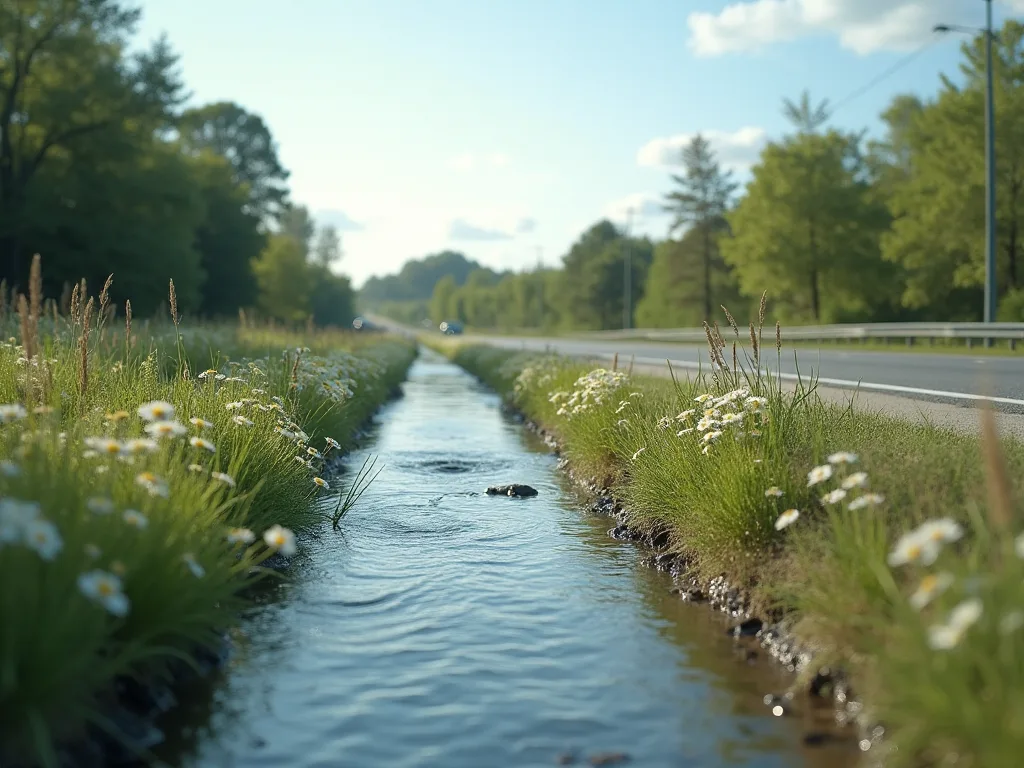
Vegetated swales offer an attractive alternative or complement to traditional curb-and-gutter drainage systems, particularly in highway segments where right-of-way width permits. These shallow, vegetated channels convey runoff at low velocities while promoting infiltration and providing water quality treatment through filtration and biological processes. Bioswales represent enhanced versions of traditional grass swales, incorporating engineered soil media, underdrain systems, and carefully selected vegetation to maximize treatment performance. These linear treatment systems integrate naturally into highway corridors and can provide continuous treatment along extended roadway segments.
The design of effective swale systems requires balancing hydraulic conveyance capacity with treatment performance. Swales must be sized to convey design storm flows without overtopping while maintaining velocities low enough to prevent erosion and allow sedimentation and infiltration. Typical design velocities range from one to three feet per second, achieved through appropriate longitudinal slopes (generally less than four percent) and cross-sectional geometry. Bottom widths, side slopes, and vegetation density all influence hydraulic performance. Check dams or level spreaders may be incorporated to reduce velocities, promote infiltration, and enhance treatment on steeper slopes.
Vegetation selection critically influences swale performance and longevity. Plant species must tolerate both wet and dry conditions, provide dense ground cover to filter runoff and stabilize soils, and survive in the often harsh highway environment with road salt exposure and periodic inundation. Native grasses and herbaceous plants typically perform well in these applications. Bioswales may incorporate more diverse plant communities including shrubs and small trees to enhance treatment and provide aesthetic benefits. Proper soil preparation and vegetation establishment procedures are essential for long-term success, as poorly established vegetation can lead to erosion, channelization, and treatment failure.
Permeable Pavement Technologies
Permeable pavement systems represent an innovative approach to managing stormwater at its source by allowing infiltration through the pavement surface itself. These systems include porous asphalt, pervious concrete, and permeable interlocking concrete pavers, each with distinct characteristics and appropriate applications. While permeable pavements have traditionally been limited to low-traffic applications such as parking lots and residential streets, advances in materials and design methods are expanding their potential use in highway applications including shoulders, emergency lanes, and median areas.
The structural design of permeable pavement systems differs significantly from conventional pavements. The pavement surface must provide adequate strength and durability while maintaining sufficient void space for water infiltration. Below the surface, an open-graded stone reservoir provides storage volume and structural support. The reservoir depth depends on required storage capacity, subgrade infiltration rates, and structural loading requirements. Underdrain systems may be incorporated where subgrade soils have limited infiltration capacity, converting the system from full infiltration to partial infiltration with controlled discharge.
Geotextile fabric typically separates the stone reservoir from underlying soils to prevent migration of fines that could clog the system.
Long-term performance of permeable pavements depends critically on proper maintenance to prevent surface clogging. Sediment accumulation in surface voids can dramatically reduce infiltration capacity over time. Maintenance procedures include regular vacuum sweeping to remove surface debris and sediment, periodic pressure washing to restore infiltration rates, and occasional rehabilitation of severely clogged surfaces. The maintenance requirements and associated costs must be carefully considered when evaluating permeable pavement alternatives. Despite these challenges, permeable pavements offer significant benefits including runoff volume reduction, peak flow attenuation, and water quality improvement, all while serving functional pavement purposes.
Bioretention Facilities and Rain Gardens
Bioretention facilities, also known as rain gardens in smaller-scale applications, have emerged as highly effective stormwater treatment practices that combine multiple treatment mechanisms in compact footprints. These systems consist of shallow depressions filled with engineered soil media and planted with appropriate vegetation. Runoff ponds on the surface, infiltrates through the soil media where physical, chemical, and biological processes remove pollutants, and either infiltrates to native soils or drains through an underdrain system. Bioretention facilities can be designed as standalone features or integrated into highway landscaping, median areas, or interchange spaces.
The design of bioretention systems requires careful specification of multiple components. The soil media must provide adequate infiltration rates (typically 0.5 to 2 inches per hour) while supporting healthy plant growth and providing pollutant removal. Standard bioretention media consists of sand, topsoil, and organic matter in specified proportions, though variations exist for specific applications or pollutant targets. Media depth typically ranges from 18 to 36 inches, balancing treatment performance with construction costs. An underdrain system consisting of perforated pipe in a gravel layer collects treated runoff where full infiltration is not feasible.
Surface ponding depth, typically 6 to 12 inches, provides temporary storage and determines the facility footprint for a given drainage area.
Plant selection for bioretention facilities must account for the unique hydrologic conditions these systems create. Plants experience periodic inundation during storm events followed by dry periods between storms. Species must tolerate these fluctuating moisture conditions while providing dense coverage to enhance infiltration and pollutant uptake. Native plants adapted to local climate and soil conditions generally perform best. Diverse plant communities including grasses, herbaceous perennials, and shrubs provide ecological benefits and visual interest.
Proper plant establishment requires attention to planting techniques, initial irrigation, mulching, and weed control. Well-designed and maintained bioretention facilities provide excellent pollutant removal, particularly for nutrients, metals, and sediment.
Constructed Wetlands for Highway Applications
Constructed wetlands offer robust, low-maintenance stormwater treatment through natural processes occurring in wetland ecosystems. These engineered systems mimic natural wetland functions, using shallow water depths, wetland vegetation, and microbial activity to remove pollutants from highway runoff. Constructed wetlands can be designed as surface flow systems with visible water or subsurface flow systems where water moves through gravel media. For highway applications, surface flow wetlands are more common, often integrated into detention basin designs to create multi-functional facilities that provide both peak flow control and water quality treatment.
The design of constructed wetlands for highway stormwater treatment involves creating appropriate hydrologic conditions to support wetland vegetation while achieving treatment objectives. Water depth typically varies across the facility, with deeper zones (2 to 4 feet) for permanent pool storage and shallower zones (6 to 18 inches) optimized for wetland plant growth. The ratio of surface area to drainage area influences treatment performance, with larger wetlands providing more contact time and better pollutant removal. Hydraulic residence time—the average time water spends in the wetland—critically affects treatment efficiency, with longer residence times generally improving removal of dissolved pollutants and allowing biological processes to function effectively.
Wetland vegetation serves multiple functions including pollutant uptake, sediment stabilization, and provision of surface area for microbial growth. Plant selection must consider water depth zones, local climate, and tolerance to highway-related stressors including salt and pollutant exposure. Emergent plants such as cattails, bulrushes, and sedges dominate shallow zones, while submerged and floating plants may occupy deeper areas. Vegetation establishment can be achieved through planting of nursery stock, transplanting from natural wetlands, or natural colonization, each approach with distinct advantages and limitations. Successful wetland establishment requires careful attention to water level management during the critical first growing season.
Hydrodynamic Separators and Proprietary Devices
Where space constraints limit the use of larger stormwater management facilities, hydrodynamic separators and other proprietary treatment devices offer compact alternatives for water quality improvement. These manufactured systems use various mechanisms including swirl concentration, screening, filtration, and settling to remove pollutants from stormwater. Hydrodynamic separators create circular flow patterns that concentrate sediment and debris in a sump area for periodic removal. Other proprietary devices employ media filtration, absorption materials, or biological treatment in compact underground or above-ground configurations.
The application of proprietary devices in highway projects requires careful evaluation of performance claims, site suitability, and life-cycle costs. Many jurisdictions maintain lists of approved devices with verified performance data for specific pollutant removal rates. Engineers must match device capabilities to project requirements, considering factors such as drainage area, expected pollutant loads, available space, and maintenance access. Installation typically requires less space than conventional practices, making these devices valuable in constrained urban highway corridors or retrofit applications. However, they generally provide more limited treatment than larger vegetated systems and require regular maintenance to sustain performance.
Maintenance requirements for proprietary devices vary by type but generally involve periodic inspection and cleaning to remove accumulated sediment and debris. Some devices require replacement of filter media or absorption materials at specified intervals. The frequency and cost of maintenance must be factored into life-cycle cost analyses when comparing proprietary devices to conventional alternatives. Documentation of maintenance activities is often required for regulatory compliance. While proprietary devices serve important roles in comprehensive stormwater management strategies, they work best as components of treatment trains rather than sole reliance solutions, particularly for highway applications with high pollutant loads.
Field Applications: Translating Theory into Practice
Site Assessment and Hydrologic Analysis
Successful implementation of highway stormwater management begins with comprehensive site assessment and hydrologic analysis. Engineers must gather detailed information about existing conditions including topography, soils, geology, groundwater, existing drainage patterns, and receiving water characteristics. Topographic surveys provide the foundation for drainage design, identifying flow paths, watershed boundaries, and potential locations for stormwater facilities. Soil investigations reveal infiltration capacity, bearing strength, and depth to bedrock or restrictive layers—all critical factors in selecting and designing appropriate stormwater controls.
Hydrologic analysis quantifies the runoff that stormwater systems must manage. This involves determining drainage areas, selecting appropriate design storm events, calculating runoff volumes and peak flows, and developing hydrographs that describe how runoff varies over time. The rational method provides a simplified approach for small drainage areas, estimating peak flow based on rainfall intensity, drainage area, and a runoff coefficient. For larger or more complex projects, continuous simulation models or event-based models like HEC-HMS provide more detailed analysis of hydrologic response. These models account for factors including rainfall distribution, infiltration, surface storage, and channel routing to predict system performance under various conditions.
Climate considerations increasingly influence hydrologic analysis for highway projects. Historical rainfall data has traditionally guided design storm selection, but changing climate patterns raise questions about whether historical records adequately represent future conditions. Some jurisdictions now require consideration of climate change impacts in stormwater design, potentially increasing design storm intensities or requiring additional freeboard in detention facilities. Engineers must stay informed about evolving guidance on climate adaptation in stormwater management and work with agencies to determine appropriate design criteria that balance current best practices with long-term resilience.
Adapting Designs to Soil Variability
Soil characteristics profoundly influence the selection and performance of stormwater management practices, yet soil conditions often vary significantly across highway project corridors. Infiltration-based practices such as bioretention, permeable pavement, and infiltration basins require soils with adequate permeability, typically sandy or loamy textures with infiltration rates exceeding 0.5 inches per hour. Clay soils with low infiltration capacity preclude full infiltration systems, necessitating alternatives such as lined detention basins, constructed wetlands, or infiltration systems with underdrains. Seasonal high groundwater tables can also limit infiltration potential and require design modifications.
Field investigation of soil conditions should include both desktop review of available soil surveys and direct field testing. The Natural Resources Conservation Service (NRCS) soil surveys provide valuable preliminary information about soil types and characteristics across project areas. However, site-specific testing through test pits or borings is essential to verify conditions and measure actual infiltration rates. Infiltration testing methods include double-ring infiltrometers, single-ring infiltrometers, and percolation tests adapted from septic system design. Multiple tests across the project area help characterize spatial variability and identify suitable locations for infiltration-based practices.
When native soils prove unsuitable for desired stormwater practices, engineers have several options. Soil amendments can improve infiltration capacity in marginally suitable soils, though this approach has limitations and requires careful specification. Excavation and replacement with engineered media allows infiltration systems in poor soils but increases costs. Hybrid systems that combine limited infiltration with underdrain discharge provide partial benefits even in low-permeability soils. In the most challenging situations, engineers may need to abandon infiltration approaches entirely and focus on detention and treatment practices that function independently of native soil characteristics.
These adaptations require engineering judgment to balance performance objectives with site constraints and project budgets.
Addressing Space Constraints in Highway Corridors
Space limitations represent one of the most common challenges in highway stormwater management, particularly in urban areas where right-of-way is expensive and constrained. Traditional detention basins require substantial land area, often difficult to accommodate within highway corridors already crowded with travel lanes, shoulders, slopes, utilities, and clear zones. Engineers must employ creative strategies to provide necessary stormwater management within available space. This may involve using deeper basins with steeper side slopes to reduce footprint, though this increases excavation costs and may create safety concerns requiring fencing or other protective measures.
Underground storage systems offer alternatives where surface space is unavailable. These systems use large-diameter pipes, vaults, or modular chambers to provide detention volume beneath roadways, parking areas, or landscaped zones. Underground systems preserve surface land for other uses but come with higher construction costs, more complex maintenance requirements, and limited water quality treatment capability. They work best in combination with upstream treatment practices that remove sediment and debris before runoff enters the storage system. Careful design of access points and cleanout capabilities is essential for long-term functionality.
Linear treatment systems such as swales and bioretention planters can be integrated into highway corridors with limited width. These practices run parallel to roadways, treating runoff continuously along the corridor rather than at discrete points. Median bioretention systems utilize space between opposing traffic directions that might otherwise serve only aesthetic purposes. Roadside swales replace traditional curb-and-gutter systems where right-of-way width permits. These linear approaches may not provide the same level of peak flow control as large detention basins but offer excellent water quality treatment and can be combined with downstream detention where needed.
The key is matching stormwater practices to available space while meeting performance objectives.
Balancing Performance with Budget Constraints
Budget limitations inevitably influence stormwater management design decisions, requiring engineers to optimize performance within financial constraints. Life-cycle cost analysis provides a framework for comparing alternatives, accounting for both initial construction costs and long-term maintenance expenses. Practices with lower construction costs may have higher maintenance requirements, while more expensive initial investments may reduce ongoing costs. For example, vegetated swales typically cost less to construct than underground detention systems but require regular mowing and periodic sediment removal. Proprietary treatment devices have moderate construction costs but may need frequent maintenance and eventual replacement.
Value engineering processes can identify cost savings without compromising essential performance. This might involve optimizing basin geometry to minimize earthwork, selecting locally available materials, or phasing construction to spread costs across multiple budget cycles. However, engineers must carefully evaluate proposed cost reductions to ensure they don't undermine fundamental stormwater management objectives or create long-term problems. Eliminating necessary maintenance access, reducing storage volume below required levels, or selecting inappropriate vegetation to save initial costs can lead to system failures and higher long-term expenses.
Innovative funding mechanisms can help overcome budget constraints for stormwater improvements. Some projects leverage environmental mitigation funds, watershed restoration grants, or partnerships with local stormwater utilities to supplement traditional highway funding. Green infrastructure practices may qualify for special funding programs that recognize their multiple benefits beyond basic stormwater management. In some cases, demonstrating superior environmental performance can help secure regulatory approvals or permits that facilitate overall project delivery. Engineers should work with project sponsors to identify all potential funding sources and structure designs to maximize eligibility for supplemental funding.
Construction Considerations and Quality Control
Even well-designed stormwater systems can fail if construction quality is inadequate. Successful implementation requires detailed construction specifications, contractor education, and rigorous quality control during construction. Specifications must clearly communicate design intent, material requirements, and construction tolerances. For example, bioretention soil media specifications should define particle size distribution, organic matter content, and infiltration rate requirements, along with testing protocols to verify compliance. Vegetation specifications must address plant species, sizes, planting methods, and establishment care.
Contractor familiarity with stormwater best management practices varies widely. Many contractors have extensive experience with traditional drainage infrastructure but less exposure to green infrastructure practices. Pre-construction meetings provide opportunities to review critical construction details, discuss potential challenges, and ensure contractors understand performance objectives. Site visits to successfully completed projects can help contractors visualize desired outcomes. Some agencies develop contractor certification programs or maintain lists of qualified contractors for specialized stormwater work.
Quality control during construction should verify that facilities are built according to plans and specifications. This includes checking grades and elevations to ensure proper drainage patterns, verifying soil media composition through testing, confirming proper installation of underdrains and outlet structures, and inspecting vegetation planting. Common construction problems include soil compaction in infiltration areas from heavy equipment traffic, improper grading that creates ponding or erosion, installation of incorrect soil media, and poor vegetation establishment. Identifying and correcting these issues during construction prevents long-term performance problems and costly post-construction remediation.
Monitoring, Maintenance, and Long-Term Performance
Performance Monitoring Programs
Monitoring stormwater system performance provides valuable information about whether facilities are functioning as designed and meeting regulatory requirements. Monitoring programs can range from simple visual inspections to sophisticated instrumentation measuring flow rates, water levels, and pollutant concentrations. The appropriate monitoring approach depends on project objectives, regulatory requirements, and available resources. At a minimum, periodic visual inspections should verify that facilities are draining properly, vegetation is healthy, and no obvious problems exist such as erosion, sediment accumulation, or structural damage.
More detailed monitoring may involve flow measurement to verify that detention basins are providing intended peak flow reductions. This requires installation of flow monitoring equipment at basin inlets and outlets to measure hydrographs during storm events. Water quality monitoring assesses pollutant removal performance by collecting and analyzing samples of inflow and outflow. Parameters typically monitored include total suspended solids, nutrients, metals, and petroleum hydrocarbons. Monitoring data helps validate design assumptions, demonstrates regulatory compliance, and identifies maintenance needs or design improvements for future projects.
Infiltration testing of permeable pavements and bioretention facilities tracks performance degradation over time. Simple surface infiltration tests using single-ring infiltrometers can be performed periodically to measure current infiltration rates and compare them to design values. Declining infiltration rates indicate clogging and trigger maintenance interventions. Some agencies establish performance thresholds that require maintenance when infiltration rates fall below specified levels. Long-term monitoring programs across multiple facilities build institutional knowledge about which practices perform well in specific applications and which require design modifications or enhanced maintenance.
Maintenance Requirements and Strategies
Ongoing maintenance is essential for sustained stormwater system performance, yet maintenance is often inadequately planned or funded. Each type of stormwater practice has specific maintenance needs that must be understood and budgeted for during design. Detention basins require periodic mowing, debris removal, sediment cleanout, and repair of erosion damage. Vegetation in bioretention facilities and swales needs watering during establishment, weeding, mulch replenishment, and occasional plant replacement. Permeable pavements require vacuum sweeping and pressure washing.
Proprietary devices need inspection and cleanout on manufacturer-recommended schedules.
Developing comprehensive maintenance plans during design helps ensure long-term functionality. Maintenance plans should identify specific tasks, recommended frequencies, required equipment and expertise, and estimated costs. Access requirements for maintenance equipment must be incorporated into facility design—detention basins need access roads capable of supporting maintenance vehicles, and underground systems require adequately sized access points. Some maintenance tasks can be performed by highway maintenance crews with appropriate training, while others may require specialized contractors.
Maintenance tracking systems help agencies manage stormwater assets and demonstrate regulatory compliance. Database systems can inventory all stormwater facilities, schedule routine maintenance, track completed work, and flag facilities needing attention. Some agencies use asset management approaches that prioritize maintenance based on facility condition, performance criticality, and available resources. Photographic documentation of facility conditions over time helps identify trends and justify maintenance expenditures. As stormwater infrastructure ages, agencies must plan for eventual rehabilitation or replacement, requiring long-term capital planning similar to other transportation assets.
Adaptive Management and System Optimization
Adaptive management recognizes that stormwater systems may not perform exactly as predicted and allows for adjustments based on observed performance. This approach involves monitoring system function, identifying deficiencies or opportunities for improvement, implementing modifications, and continuing to monitor results. For example, if a bioretention facility shows signs of poor drainage, investigation might reveal compacted soils or clogged underdrains. Remedial actions could include soil cultivation, underdrain cleaning, or installation of additional drainage. If vegetation struggles to establish, soil amendments, irrigation improvements, or species substitutions might be warranted.
Climate change and evolving land use patterns may alter the hydrologic conditions that stormwater systems were designed to manage. Increased rainfall intensity could overwhelm existing detention capacity, requiring expansion or supplementation with additional practices. Watershed development upstream of highway facilities can increase runoff volumes beyond original design assumptions. Adaptive management frameworks allow agencies to respond to these changing conditions through system modifications, operational adjustments, or enhanced maintenance. This flexibility is particularly important for long-lived highway infrastructure that must function effectively over decades despite changing conditions.
Lessons learned from monitoring and maintenance should inform future design decisions. Agencies should systematically capture and share knowledge about which practices perform well in specific applications and which encounter problems. Design standards and specifications should evolve based on field experience. For example, if certain plant species consistently fail in bioretention facilities, they should be removed from approved plant lists. If specific soil media formulations show superior performance, they should become standard specifications.
This continuous improvement process, grounded in field experience, gradually enhances the effectiveness and reliability of stormwater management programs.
Emerging Technologies and Future Directions
Smart Stormwater Infrastructure
Advances in sensor technology, data analytics, and control systems are enabling "smart" stormwater infrastructure that actively responds to changing conditions. Real-time monitoring of water levels, flow rates, and weather forecasts allows dynamic operation of detention facilities to optimize performance. For example, controlled outlet structures can be adjusted based on predicted rainfall to maximize available storage for incoming storms while ensuring basins drain adequately between events. These active systems can provide superior performance compared to passive infrastructure, though they require more sophisticated design, installation, and ongoing management.
Remote monitoring systems using wireless sensors and cellular or internet connectivity allow agencies to track stormwater system performance without manual site visits. Water level sensors in detention basins can alert maintenance staff to drainage problems. Flow monitors can verify that systems are functioning during storm events. Soil moisture sensors in bioretention facilities can trigger irrigation systems during dry periods to maintain vegetation health. These technologies reduce labor costs for routine monitoring while providing more frequent and comprehensive data about system performance.
As sensor costs decline and connectivity improves, smart stormwater infrastructure will likely become increasingly common in highway applications.
Advanced Treatment Technologies
Research continues to develop enhanced treatment technologies for highway stormwater pollutants of particular concern. Phosphorus removal has proven challenging with conventional practices, spurring development of specialized media containing iron, aluminum, or calcium compounds that bind phosphorus through chemical reactions. These amendments can be incorporated into bioretention systems or used in standalone filters. Similarly, media designed to capture dissolved metals, petroleum hydrocarbons, or other specific pollutants offer targeted treatment where conventional practices provide inadequate removal.
Emerging contaminants including microplastics from tire wear, PFAS compounds, and pharmaceutical residues are receiving increased attention. Highway runoff contains significant loads of tire-derived particles that contribute to microplastic pollution in aquatic environments. Research is exploring treatment approaches including fine filtration, settling enhancement, and vegetation uptake to address these contaminants. As understanding of emerging pollutants and their impacts grows, stormwater treatment technologies will need to evolve to address these challenges. Highway agencies should stay informed about research developments and be prepared to incorporate new treatment approaches as they become proven and cost-effective.
Green Infrastructure Integration
The integration of green infrastructure into highway design continues to expand, driven by recognition of multiple benefits beyond stormwater management. Vegetated stormwater practices provide habitat for pollinators and other wildlife, enhance corridor aesthetics, reduce urban heat island effects, sequester carbon, and improve air quality. These co-benefits strengthen the value proposition for green infrastructure investments and may unlock additional funding sources. Highway agencies are increasingly collaborating with environmental organizations, landscape architects, and ecologists to design stormwater systems that maximize ecological and social benefits while meeting core drainage and water quality objectives.
Complete streets and context-sensitive design philosophies emphasize integration of transportation infrastructure with community values and environmental goals. Stormwater management provides opportunities to advance these objectives through visible, attractive green infrastructure that demonstrates environmental stewardship. Roadside rain gardens, vegetated medians, and constructed wetlands can transform highway corridors from purely utilitarian infrastructure into community assets. Public engagement in design processes can identify opportunities to align stormwater management with community priorities, building support for projects and fostering stewardship of completed facilities.
Climate Resilience and Adaptation
Climate change is fundamentally altering the context for highway stormwater management. Many regions are experiencing increased rainfall intensity, with more frequent extreme precipitation events that challenge existing drainage infrastructure. Other areas face increased drought, affecting vegetation survival in stormwater practices. Sea level rise threatens coastal highway drainage systems with saltwater intrusion and reduced gravity drainage capacity. These changing conditions require adaptation strategies that enhance system resilience and flexibility.
Resilient stormwater design incorporates additional capacity to accommodate more intense storms, uses diverse plant communities that can tolerate variable conditions, and includes redundancy so that system failure at one location doesn't cascade into broader problems. Some agencies are increasing design storm return periods or intensity values to account for projected climate changes. Others are emphasizing distributed, decentralized stormwater management that provides multiple flow paths and treatment opportunities rather than relying on single large facilities. Flexible designs that can be modified or expanded as conditions change provide adaptability in the face of uncertainty about future climate conditions.
Nature-based solutions that work with natural processes rather than against them often provide inherent climate resilience. Vegetated systems can adapt to changing moisture regimes through species shifts and ecological succession. Floodplain reconnection and stream restoration allow natural systems to accommodate increased flows. These approaches contrast with rigid engineered systems that may fail catastrophically when design conditions are exceeded. As climate uncertainty increases, the flexibility and resilience of nature-based stormwater management becomes increasingly valuable, even if precise performance prediction is more challenging than with conventional engineered systems.
Regulatory Framework and Compliance Strategies
Federal Stormwater Regulations
The Clean Water Act establishes the federal regulatory framework for stormwater management, with the National Pollutant Discharge Elimination System (NPDES) program as the primary implementation mechanism. Highway construction projects disturbing one acre or more require coverage under NPDES Construction General Permits, which mandate development and implementation of Stormwater Pollution Prevention Plans (SWPPPs). These plans identify potential pollutant sources, describe erosion and sediment control measures during construction, and outline post-construction stormwater management. Compliance requires proper installation and maintenance of control measures, regular inspections, and documentation of all activities.
Post-construction stormwater requirements under NPDES Municipal Separate Storm Sewer System (MS4) permits affect many highway agencies. These permits require implementation of minimum control measures including public education, illicit discharge detection, construction site runoff control, post-construction stormwater management, pollution prevention, and good housekeeping. Highway projects must incorporate permanent stormwater controls that meet MS4 permit requirements, typically including both runoff volume/peak flow management and water quality treatment. Some MS4 permits establish specific performance standards such as treating a defined water quality volume or reducing pollutant loads by specified percentages.
Section 404 of the Clean Water Act regulates discharge of dredged or fill material into waters of the United States, including wetlands. Highway projects that impact wetlands or streams require permits from the U.S. Army Corps of Engineers. Stormwater discharge points and outfall structures may trigger Section 404 jurisdiction. Permit requirements often include mitigation for unavoidable impacts, which may involve wetland creation, restoration, or preservation. Stormwater constructed wetlands can sometimes serve dual purposes of water quality treatment and compensatory mitigation, though regulatory agencies scrutinize such proposals carefully to ensure genuine wetland functions are provided.
State and Local Requirements
State and local stormwater regulations often exceed federal minimum requirements, establishing more stringent performance standards or additional design criteria. Many states have developed comprehensive stormwater management manuals that specify design procedures, approved practices, and performance standards for highway and other development projects. These manuals typically require hydrologic and hydraulic analysis using specified methods, design of stormwater practices according to detailed criteria, and long-term maintenance plans. Engineers must thoroughly understand applicable state and local requirements early in project development to ensure designs meet all regulatory obligations.
Some jurisdictions have adopted low-impact development (LID) ordinances that require or incentivize green infrastructure approaches. These regulations may mandate infiltration of a specified runoff volume, limit directly connected impervious area, or require use of specific LID practices where feasible. Highway projects in these jurisdictions must demonstrate how designs incorporate LID principles or document why site constraints preclude their use. Total Maximum Daily Load (TMDL) requirements in impaired watersheds may impose additional pollutant reduction obligations beyond general stormwater permits, requiring enhanced treatment or specific practices targeting pollutants of concern.
Local drainage ordinances and floodplain regulations also affect highway stormwater design. Many communities require that post-development peak discharge rates not exceed pre-development rates for multiple storm frequencies, necessitating detention facilities. Floodplain regulations may restrict fill placement, require compensatory storage for floodplain impacts, or mandate minimum freeboard above base flood elevations. Highway projects must navigate these overlapping regulatory requirements, ensuring designs satisfy all applicable criteria. Early coordination with regulatory agencies helps identify requirements, resolve potential conflicts, and streamline permitting processes.
Documentation and Reporting
Regulatory compliance requires comprehensive documentation of stormwater management design, construction, and maintenance. Design documentation typically includes drainage area maps, hydrologic calculations, hydraulic analyses, stormwater practice design details, and operation and maintenance plans. This information supports permit applications and provides the basis for regulatory review and approval. Clear, well-organized documentation facilitates efficient permit processing and reduces the likelihood of requests for additional information that delay projects.
Construction phase documentation includes SWPPPs, inspection reports, and records of control measure installation and maintenance. Many permits require weekly inspections during active construction and after storm events, with documentation of findings and corrective actions. Photographic documentation provides valuable records of site conditions and implemented measures. Some jurisdictions require third-party inspection and certification of stormwater practices before final project acceptance. Maintaining thorough construction records protects agencies from potential enforcement actions and demonstrates good-faith compliance efforts.
Post-construction reporting requirements vary by jurisdiction but often include annual reports documenting maintenance activities, inspection findings, and any monitoring data. Some MS4 permits require tracking of stormwater infrastructure assets, maintenance expenditures, and performance metrics. Database systems that inventory stormwater facilities and track maintenance activities facilitate compliance reporting while supporting asset management. As regulatory scrutiny of stormwater management intensifies, robust documentation and reporting systems become increasingly important for demonstrating compliance and avoiding enforcement actions.
Case Studies and Practical Implementation Examples
Urban Highway Retrofit Project
A major urban interstate retrofit project illustrates the challenges and solutions for stormwater management in constrained corridors. The existing highway had been constructed decades earlier with minimal stormwater controls, discharging untreated runoff directly to an impaired urban stream. Widening to add capacity triggered modern stormwater requirements including water quality treatment and peak flow control. However, the urban setting provided extremely limited right-of-way for conventional detention basins or other large facilities.
The design team developed a distributed treatment approach using multiple practice types optimized for available spaces. Bioretention facilities were integrated into reconstructed median areas, treating runoff from interior lanes. Roadside swales replaced curb-and-gutter systems where right-of-way width permitted, providing linear treatment along the corridor. Underground detention chambers beneath reconstructed interchange areas provided peak flow control where surface detention was impossible. Hydrodynamic separators at key outfall locations provided additional treatment for areas where other practices couldn't be accommodated.
This multi-faceted approach achieved regulatory requirements within severe space constraints, though at higher cost than conventional approaches in unconstrained settings.
Rural Highway with Wetland Treatment
A rural highway reconstruction project in a sensitive watershed demonstrates effective use of constructed wetlands for stormwater treatment. The project corridor traversed agricultural land before crossing a high-quality trout stream. Regulatory agencies expressed concern about potential impacts to the stream from highway runoff, particularly sediment, nutrients, and thermal pollution. The design incorporated a series of constructed wetland cells that received runoff from the highway, provided extended detention and treatment, and discharged to the stream.
The wetland system was designed with multiple cells providing different functions. An initial forebay captured coarse sediment and debris. Shallow marsh areas with dense emergent vegetation provided biological treatment and fine sediment removal. Deeper open water zones allowed settling and thermal moderation. The system was sized to provide 48-hour residence time for the water quality design storm, ensuring adequate contact time for treatment processes.
Native wetland plants were established through a combination of nursery stock planting and natural colonization. Monitoring during the first five years of operation demonstrated excellent pollutant removal and successful vegetation establishment, with the wetland system becoming a valued landscape feature and wildlife habitat in addition to its stormwater function.
Permeable Pavement Demonstration
A state highway agency implemented a demonstration project using permeable pavement in highway shoulders to evaluate performance and maintenance requirements. The project installed pervious concrete shoulders along a two-mile segment of rural highway, with conventional asphalt shoulders on an adjacent segment serving as a control. The pervious concrete was designed with an open-graded stone reservoir beneath providing storage and infiltration capacity. Monitoring equipment measured infiltration rates, runoff volumes, and water quality from both the permeable and conventional sections.
Results from the first three years showed that the permeable shoulders significantly reduced runoff volume and peak flows compared to conventional shoulders, with infiltration rates remaining adequate despite some surface clogging. Water quality monitoring revealed excellent removal of suspended solids and associated pollutants. However, winter maintenance proved challenging, as sand applied for traction accelerated surface clogging. The agency modified maintenance procedures to minimize sand use on permeable sections and implemented more frequent vacuum sweeping. Based on the demonstration results, the agency developed design and maintenance guidelines for permeable pavement applications in highway projects, identifying appropriate uses and necessary maintenance commitments.
Essential Implementation Checklist
Successful highway stormwater management requires systematic attention to numerous technical, regulatory, and practical considerations throughout project development and implementation. The following checklist provides a framework for comprehensive stormwater planning and design:
Planning and Assessment Phase
- Identify all applicable federal, state, and local stormwater regulations and permit requirements
- Delineate drainage areas and characterize existing hydrologic conditions
- Conduct topographic surveys and develop accurate base mapping
- Perform soil investigations including infiltration testing and groundwater assessment
- Identify receiving waters and assess existing water quality conditions
- Determine if receiving waters are impaired and subject to TMDL requirements
- Locate existing utilities, right-of-way boundaries, and other constraints
- Identify sensitive environmental resources including wetlands, streams, and habitat areas
- Engage with regulatory agencies early to clarify requirements and expectations
- Establish stormwater management goals and performance criteria for the project
Design Development Phase
- Select design storm events based on regulatory requirements and risk tolerance
- Perform hydrologic analysis to quantify runoff volumes and peak flows
- Evaluate alternative stormwater management approaches considering site constraints, performance, and costs
- Size stormwater practices using appropriate design methods and safety factors
- Develop detailed design drawings showing all components and construction details
- Prepare technical specifications for materials, construction methods, and quality control
- Design for maintenance access and long-term functionality
- Incorporate erosion and sediment control measures for construction phase
- Develop operation and maintenance plans with specific tasks, frequencies, and responsibilities
- Prepare permit applications and supporting documentation
- Conduct value engineering review to optimize costs while maintaining performance
- Coordinate with other project elements including roadway design, utilities, and landscaping
Construction Phase
- Conduct pre-construction meeting to review stormwater requirements with contractor
- Verify installation of erosion and sediment controls before land disturbance
- Inspect and maintain erosion controls throughout construction
- Protect areas designated for infiltration practices from soil compaction
- Verify grades, elevations, and dimensions of stormwater facilities
- Test soil media, aggregate, and other materials for compliance with specifications
- Inspect installation of underdrains, outlet structures, and other components
- Verify proper vegetation planting and establishment procedures
- Document construction with photographs and as-built drawings
- Conduct final inspection and performance verification before project acceptance
Operations and Maintenance Phase
- Establish asset inventory of all stormwater facilities with locations and key characteristics
- Implement routine inspection program according to maintenance plan schedules
- Perform scheduled maintenance tasks including mowing, debris removal, and sediment cleanout
- Monitor vegetation health and replace failed plants as needed
- Test infiltration rates periodically and perform restoration when rates decline
- Repair erosion damage, structural problems, and other deficiencies promptly
- Document all maintenance activities and inspection findings
- Track maintenance costs and compare to budget projections
- Conduct performance monitoring if required by permits or desired for evaluation
- Prepare compliance reports as required by regulatory permits
- Update maintenance plans based on experience and changing conditions
- Plan for long-term rehabilitation or replacement as facilities age
Conclusion: Integrating Excellence in Highway Stormwater Management
The effective management of stormwater in highway design represents a critical intersection of engineering science, environmental stewardship, and practical problem-solving. As this comprehensive exploration has demonstrated, success requires far more than simply applying standard design templates. It demands deep understanding of hydrologic and hydraulic principles, thorough knowledge of available stormwater management practices and their appropriate applications, careful site assessment and adaptation to local conditions, creative solutions to space and budget constraints, and unwavering commitment to long-term maintenance and performance.
The field continues to evolve rapidly, driven by advancing technology, emerging environmental challenges, and growing recognition of the multiple benefits that well-designed stormwater systems can provide. Green infrastructure approaches that integrate stormwater management with ecological enhancement, community amenities, and climate resilience are becoming mainstream rather than experimental. Smart infrastructure incorporating sensors and adaptive controls promises to optimize performance and reduce maintenance burdens. New treatment technologies address emerging contaminants and challenging pollutants. These innovations expand the toolkit available to highway engineers while also requiring continuous learning and adaptation.
Perhaps most importantly, successful highway stormwater management requires recognizing that theoretical design principles must be thoughtfully adapted to the messy reality of field conditions. Soil variability, space constraints, budget limitations, construction challenges, and maintenance realities all influence what can actually be achieved. The most elegant theoretical solution means nothing if it cannot be constructed within available resources, maintained over its design life, or adapted to site-specific conditions. This reality demands engineering judgment, creativity, and willingness to iterate designs based on field observations and performance monitoring.
Looking forward, climate change will increasingly challenge existing stormwater infrastructure and design assumptions. More intense precipitation events, changing seasonal patterns, and rising sea levels in coastal areas will require adaptive, resilient approaches that can accommodate uncertainty and changing conditions. Nature-based solutions that work with natural processes rather than against them offer inherent flexibility and resilience. Distributed, decentralized systems provide redundancy and multiple flow paths. These strategies, combined with ongoing monitoring and adaptive management, position highway stormwater systems to function effectively even as conditions change.
The regulatory landscape will continue to evolve, likely becoming more stringent as understanding of stormwater impacts grows and water quality concerns intensify. Highway agencies must stay ahead of regulatory changes, implementing best practices proactively rather than reactively. Building strong relationships with regulatory agencies, participating in development of new guidance and standards, and demonstrating leadership in stormwater management can help shape reasonable, effective requirements while ensuring highway projects meet environmental protection goals.
Ultimately, excellence in highway stormwater management comes from integrating multiple perspectives and expertise. Civil engineers bring hydraulic design skills and infrastructure knowledge. Environmental scientists contribute understanding of pollutant fate and transport, ecological impacts, and treatment mechanisms. Landscape architects provide design sensibility that creates attractive, functional facilities. Construction professionals offer practical insights about buildability and cost-effectiveness.
Maintenance personnel understand long-term operational realities. Regulatory specialists navigate permitting requirements. Successful projects draw upon all these perspectives, creating solutions that are technically sound, environmentally protective, economically feasible, and practically maintainable.
For engineers and planners working in this field, the challenge is significant but the opportunity is equally substantial. Every highway project offers chances to implement innovative stormwater solutions, protect water resources, enhance community environments, and demonstrate that transportation infrastructure can be both functional and environmentally responsible. By balancing theoretical principles with field realities, embracing new technologies and approaches while learning from experience, and maintaining focus on long-term performance rather than just initial construction, highway professionals can advance the state of practice in stormwater management. The result will be transportation systems that serve mobility needs while protecting and enhancing the water resources upon which all communities depend.
As you move forward with highway stormwater management projects, remember that success is measured not just by meeting minimum regulatory requirements but by creating systems that perform reliably over decades, adapt to changing conditions, and contribute positively to watershed health and community well-being. This requires commitment to excellence in every phase from initial planning through long-term maintenance. It demands continuous learning, willingness to innovate, and dedication to translating theoretical knowledge into practical field applications. The challenges are real, but so are the rewards of creating highway infrastructure that truly balances mobility, safety, economic efficiency, and environmental protection.
For additional resources on stormwater management best practices, the Environmental Protection Agency's stormwater program provides comprehensive guidance on regulatory requirements and technical approaches. The Federal Highway Administration offers highway-specific stormwater resources and case studies. Professional organizations such as the American Society of Civil Engineers provide continuing education and technical publications that keep practitioners current with evolving best practices. By leveraging these resources and the principles outlined in this article, highway professionals can design and implement stormwater management systems that truly excel in both theory and field application.