Table of Contents
Understanding Warping and Distortion in Sheet Metal Fabrication
Warping and distortion represent some of the most persistent challenges in sheet metal fabrication, affecting product quality, dimensional accuracy, and manufacturing efficiency across industries. These deformations can compromise the structural integrity of components, lead to assembly problems, and result in costly rework or material waste. Understanding the root causes of these issues and implementing effective prevention and correction strategies is essential for fabricators seeking to maintain high-quality standards and competitive production processes.
Warping, which is the distortion or deviation from a flat, planar surface, can compromise not only the aesthetic appeal of a finished product but also its structural integrity and functionality. This unwanted bending or twisting often leads to costly rework, project delays, and material waste. Whether you're working with thin-gauge aluminum, stainless steel assemblies, or mild steel components, the principles and techniques outlined in this comprehensive guide will help you achieve superior results in your fabrication projects.
The Physics Behind Sheet Metal Warping
Thermal Expansion and Contraction Cycles
Warping in sheet metal welding isn't accidental — it is predictable physics. When a weld heats the metal, it expands. When it cools, it contracts. The metal around your weld puddle expands rapidly as temperatures soar past 2,500°F. Then, as soon as you move forward, that same area cools and contracts. This expansion-contraction cycle happens in seconds, but the effects last forever.
As metal heats up it begins to expand, when this expansion is local it causes the part to begin to bend. The surrounding cooler metal acts as a constraint, preventing the heated section from expanding freely. As the weld cools and the metal contracts, the uneven cooling leads to a distortion of the panel, often resulting in a noticeable bend or curl.
Residual Stress Formation
A finite element model has been developed to predict the residual stresses generated in weldments during fabrication. The thermal history of the weld piece is computed using a three-dimensional heat flow model which serves as input for computation of stresses. The longitudinal stresses are found to be as high as the yield stress, and the transverse stresses are found to be almost half of the longitudinal stresses.
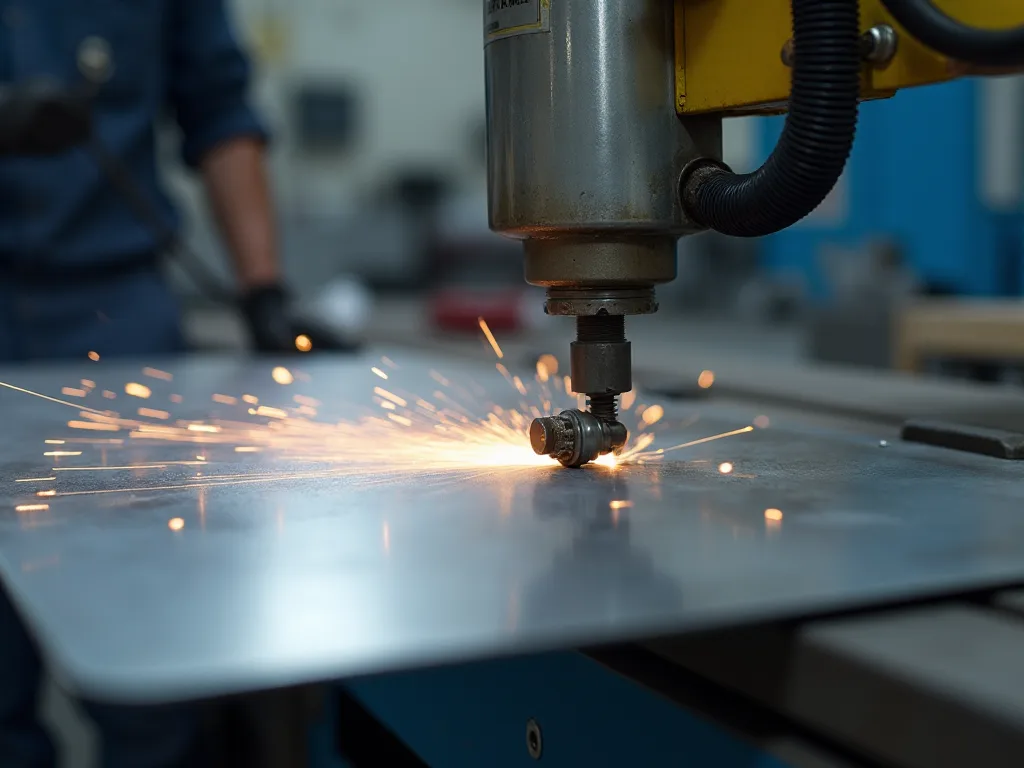
During processes like welding, plasma cutting, or laser cutting, intense heat is applied to a localized area. This area expands rapidly, while the surrounding cooler metal resists this expansion, creating compressive stress. As the heated area cools and contracts, it pulls on the surrounding material, introducing tensile stresses that ultimately cause the sheet to warp or buckle.
A welding example involves heating and cooling of metal which is a combination of thermal expansion, contraction, and temperature gradients. After a full cycle of heating and cooling, the metal is left with residual stress around the weld. These residual stresses remain locked in the material even after it returns to ambient temperature, creating internal forces that can manifest as visible distortion.
Material Properties and Thermal Behavior
At the heart of every metal are two important traits: thermal conductivity and thermal expansion. Together, they determine how a material reacts to welding heat. Different materials exhibit vastly different thermal personalities that directly impact their susceptibility to warping.
Thin-gauge metals, especially aluminum and stainless steel, are at higher risk. Aluminum has a high thermal expansion rate, meaning it grows and shrinks more with heat exposure. Stainless steel, while more rigid, also retains heat longer, increasing the likelihood of uneven cooling. The thinner the material, the less structural integrity it has to resist these changes.
Sheet metal welding requires precise energy management because thin materials have low thermal mass. Heat dissipates quickly through the surrounding material, but the weld zone itself can overheat within milliseconds. This creates a challenging balance between achieving adequate penetration and avoiding excessive heat input that compromises the base material.
Primary Causes of Warping in Sheet Metal Fabrication
Welding-Induced Distortion
The magnitude of this warping effect is influenced by a variety of factors, including the thickness of the sheet metal, the intensity of the welding heat, the welding speed, and the clamping or support provided during the process. Thicker materials, higher heat inputs, and inadequate clamping can all exacerbate the warping problem, making it a true challenge for even the most experienced welders.
Running a single bead from start to finish on a long seam practically guarantees distortion. As you travel down the joint, heat accumulates ahead of your arc. The metal temperature keeps rising, expansion increases, and by the time you reach the end, you've created a bowed, twisted mess. This cumulative heat buildup is one of the most common mistakes in sheet metal welding.
Most distortion isn't caused by one mistake. A series of slight thermal imbalances causes it. The key is not fighting movement at the end, but controlling how metal moves from the start. A panel may move only 0.15–0.25mm with each weld pass — but after 10 passes, you're holding a 2–3mm problem.
Heat-Affected Zone Considerations
Heat input determines everything. The more heat you pump into thin material, the wider the affected zone becomes. The heat-affected zone (HAZ) extends beyond the visible weld bead, creating a region where the material's microstructure and mechanical properties have been altered by thermal exposure.
For example, welding or laser cutting generates concentrated heat in a specific area. As that zone expands and then cools, the surrounding cooler metal resists the change, leading to tension and potential distortion. Understanding and controlling the size of the heat-affected zone is crucial for minimizing distortion in precision fabrication work.
Mechanical Stress and Improper Handling
Another significant factor is mechanical stress, which can be induced by improper handling, such as lifting a large sheet from one corner, or by uneven clamping during fabrication. Improper handling and storage of sheet metal components can also contribute to warping and deformation. Mishandling the metal, such as dropping or bending it, can introduce external forces that distort the shape of the component. In addition, storing the metal in unsuitable conditions, such as areas with high humidity or temperature fluctuations, can lead to dimensional changes over time.
Even poor handling or stacking practices can cause warping if the material isn't properly supported. This is particularly problematic with large, thin-gauge sheets that can sag under their own weight when not adequately supported during storage or transport.
Internal and Residual Stresses
Finally, there's internal or residual stress, which is locked into the material during its manufacturing process. While all metal sheets have some degree of internal stress, higher-quality sheets, such as our premium brushed stainless steel, are manufactured with advanced processes designed to minimize these inherent stresses, providing a more stable and predictable foundation for your work.
Some fabricated structures and assemblies may distort at the galvanizing temperature as a result of relieving stresses induced during steel production and in subsequent fabricating operations. In general, the potential for warpage/distortion can be greatly reduced through design and production engineering measures to avoid high internal stresses.
Material-Specific Warping Characteristics
Aluminum Sheet Metal
Aluminum presents unique challenges in sheet metal fabrication due to its high thermal conductivity and expansion coefficient. The material conducts heat approximately three times faster than steel, which means the heat-affected zone spreads more rapidly during welding operations. This rapid heat distribution can actually be advantageous in some situations, as it reduces the temperature gradient between the weld zone and surrounding material.
However, aluminum's high thermal expansion coefficient means it grows and shrinks significantly more than steel during heating and cooling cycles. This characteristic makes aluminum particularly prone to distortion when subjected to localized heating. Fabricators working with aluminum must use lower heat inputs, faster travel speeds, and more aggressive fixturing strategies compared to steel fabrication.
Thin-gauge aluminum sheets (under 3mm) are especially susceptible to warping and require specialized techniques such as pulsed welding, backing bars, and strategic heat sinking to maintain dimensional stability. The material's relatively low melting point also means that burn-through is a constant concern when working with thin sections.
Stainless Steel Fabrication
Stainless steel exhibits lower thermal conductivity than both aluminum and mild steel, which creates concentrated heat zones during welding. This poor heat dissipation means that the weld area stays hot longer, increasing the risk of distortion. The material also has a higher thermal expansion coefficient than mild steel, compounding the warping challenge.
Austenitic stainless steels (300 series) are particularly prone to distortion due to their high thermal expansion and low thermal conductivity combination. These materials require careful heat management, including lower amperage settings, faster travel speeds, and adequate cooling time between passes to prevent excessive distortion.
The chromium content in stainless steel also affects its welding characteristics. Higher chromium grades tend to be more sensitive to heat input and require more precise control to avoid warping. Fabricators must balance the need for adequate penetration with the risk of introducing excessive heat that leads to distortion.
Mild Steel and Carbon Steel
Mild steel offers the most forgiving characteristics for sheet metal fabrication, with moderate thermal conductivity and expansion properties. The material's balanced thermal behavior makes it less prone to warping compared to aluminum or stainless steel, though distortion remains a concern with thin gauges.
The most commonly distorted members of assemblies is that of sheet or plate which is ¼ in thickness or less the lighter the gauge of the steel, the greater the risk of warpage/distortion. Even with mild steel's favorable properties, thin sections require proper fixturing and heat management to maintain dimensional accuracy.
Carbon content affects the material's response to heat. Higher carbon steels are more prone to hardening in the heat-affected zone and may develop residual stresses that contribute to warping. Low-carbon mild steels (under 0.25% carbon) provide the best combination of weldability and resistance to distortion.
Prevention Strategies: Design and Planning Phase
Joint Design Optimization
The key to minimizing warping starts with the design of the welded joint itself. By carefully considering the joint configuration, we can optimize the distribution of heat and stresses, reducing the likelihood of distortion. For example, selecting a lap joint over a butt joint can help dissipate heat more evenly, while a well-placed backing plate can provide additional support and stability during the welding process.
For butt welds, we chamfer both edges, keeping the angle tight—ideally under 60 degrees—and minimizing the root gap. The tighter the fit, the less heat it takes to make a strong weld. Proper joint preparation reduces the volume of filler metal required, which directly correlates to reduced heat input and lower distortion risk.
Joint accessibility also plays a crucial role in distortion control. Designs that allow welding from both sides enable balanced heat input, which helps counteract distortion forces. Single-sided welds concentrate all thermal stress on one side of the joint, creating asymmetric forces that pull the assembly out of alignment.
Symmetrical Design Principles
Where possible, use symmetrically rolled sections in preference to angle or channel frames. I-beams are preferred to angles or channels. Use parts in an assembly of equal or near equal thickness, especially at joints. Symmetrical designs distribute thermal stresses more evenly, reducing the tendency for components to warp in unpredictable directions.
Theres also an option to make an asymmetrical piece into a symmetrical shape. The unrecoverable beam we saw before, for example, could have been made more symmetrical by welding a similar U-shaped piece to the bottom as well as the top. This could cause the internal stresses in the bath to counteract each other and prevent the piece from warping.
Material Selection and Thickness Considerations
In addition to choosing the right material, selecting the appropriate thickness of the sheet metal is also crucial in preventing warping. Thicker materials are less likely to deform under heat or stress compared to thinner materials. By carefully considering the material and thickness requirements of the component, manufacturers can minimize the risk of warping and ensure the structural integrity of the final product.
The most effective measure that is also easier to do in practice is to simply give the heat somewhere to go. This is why thicker members do not have as many issues with welding distortion, there is simply enough meat in the part for the heat to be adequately absorbed without distorting. However, just because you are working on a thin part doesn't mean that you can't add some meat to it. Fortunately, conductivity between metals is quite good which allows you to clamp on a chunk of metal to give it similar thermal characteristics as a thicker member.
Early Collaboration Between Stakeholders
The best prevention is to start discussions between the designer, fabricator, and galvanizer at an early stage in the design process so that good design features can be incorporated. Early collaboration ensures that all parties understand the fabrication challenges and can contribute to design solutions that minimize warping risk.
The earlier warpage is considered in a project, the easier it is to manage. Weld placement, joint selection, and part geometry all play a role in how distortion shows up—or doesn't. Designers who understand how parts behave during welding can often avoid distortion altogether.
Welding Techniques for Distortion Control
Heat Input Management
Reducing the average heat input by ~15% often results in a 30–50% reduction in distortion in a 0.8–2.0mm sheet. You don't fix warping later — you prevent it at the trigger. Controlling heat input is the single most effective strategy for preventing warping during welding operations.
Keep the heat low. We use intermittent welds whenever possible, avoiding continuous beads that concentrate heat. Less filler metal means less distortion. Minimizing filler metal volume reduces both the total heat input and the shrinkage forces that develop as the weld cools.
Successful welding depends on controlling three variables simultaneously: power density, travel speed, and duty cycle. Fabricators must balance these parameters to achieve adequate fusion while minimizing the heat-affected zone and total thermal energy introduced into the workpiece.
Skip Welding and Back-Step Techniques
Skip welding breaks the joint into short segments welded in a planned sequence. Instead of welding 24 inches continuously, you'd weld 2-inch segments with gaps between them, returning later to fill the spaces. This welding procedure for large panels allows each segment to cool before adjacent areas get heated.
Meanwhile, the back-step welding technique works similarly but moves backward along the joint. You weld a short segment, then step back and weld the next segment toward your starting point. Both methods prevent the heat buildup that causes major warping.
Backstep welding. Instead of moving continuously along the seam, we jump ahead and weld back toward the last stitch. This technique distributes heat more evenly across the joint and prevents the progressive heat accumulation that occurs with continuous welding.
Staggered and Balanced Welding Sequences
Staggered or backstep welding distributes heat more evenly across the material. Strategic sequencing ensures that heat is introduced in a pattern that balances thermal stresses rather than allowing them to accumulate in one direction.
Use patterns that avoid building heat in the same direction: ✔ Skip-welding (never chase heat in a straight line) ... Weld in segments: heat–cool–heat–cool, never heat–heat–heat. This approach gives each welded section time to cool and stabilize before adjacent areas are heated, reducing cumulative distortion.
Sequence controls heat paths. When combined, they prevent distortion instead of reacting to it. If you tighten everything, then weld straight across, distortion will find its exit point. If you clamp smartly and weld in balance, distortion has no direction to escape.
Tack Welding Strategy
Proper tack welding serves as the foundation for distortion control in sheet metal assemblies. Tacks should be strategically placed to hold components in alignment while allowing for controlled movement during final welding. The size and spacing of tack welds must be carefully planned—too few tacks allow excessive movement, while too many create rigid constraints that trap stress.
For long seams, tacks should be placed working from the center outward to the edges. This sequence allows thermal expansion to move toward the ends rather than building up in the middle. Tack welds should be small enough to be easily incorporated into the final weld pass but substantial enough to maintain alignment under thermal stress.
This helps prevent warpage in that you're not running a long bead and constantly pushing an ever-increasing region of extreme heat across the metal. The affected sections expand slightly into the unaffected sections, and the cool-down is reasonably consistent throughout the whole of the base metal.
Multi-Pass Welding Considerations
In many cases, it's better to use a large electrode and make fewer passes than use a smaller electrode and make multiple passes. The effects of the heating, cooling, and resultant distortion are cumulative, with each pass running a greater risk of significant warpage.
When multiple passes are unavoidable, each pass should be planned to counteract the distortion from previous passes. Alternating sides of the joint or using a balanced sequence helps distribute thermal stresses more evenly. Allowing adequate cooling time between passes prevents heat accumulation that amplifies distortion with each successive weld.
Fixturing and Clamping Solutions
Proper Clamping Techniques
Proper clamping and fixturing are essential in the war against warping. By securely holding the sheet metal in place during welding, we can prevent the uneven thermal expansion and contraction that leads to distortion. Utilize robust clamps, jigs, and fixtures to keep the workpiece firmly anchored, and consider using tack welds or spot welds to further stabilize the assembly.
Clamps and jigs help secure parts and maintain their shape throughout the fabrication process. However, clamping strategy must be carefully considered to avoid creating new problems while solving distortion issues.
A fixture is not a restraint — it is a guide. It should direct how the metal moves, not suppress movement entirely. Over-clamping traps stress and causes warpage later; good fixturing controls expansion, rather than fighting it. A part held perfectly flat during welding often warps the moment it's freed. Flat under the clamp ≠ is in service.
Fixture Design Principles
For fixture design, think rigidity first. Your fixture must be stronger and more stable than the forces trying to distort your workpiece. Use thick steel construction, and make sure your clamping surfaces are large enough to distribute pressure without creating dents.
Position clamps close to the weld joint but not so close that they interfere with your torch access. The right amount of clamping force holds firmly without crushing thin material—hand-tight on locking pliers is usually sufficient. Over-tightening can create stress concentrations that contribute to distortion rather than preventing it.
Ensure rigid positioning to prevent movement under thermal stress · Incorporate thermal mass or cooling features into the fixture design · Allow for easy clamping/unclamping to maintain efficiency in multi-part assemblies Modern fixture design integrates thermal management features that help control heat distribution during welding.
Heat Sinks and Backing Bars
Copper works as a backing bar because of its exceptional thermal conductivity—it absorbs heat roughly 10 times faster than steel. When you clamp a copper bar behind your weld, it creates a thermal pathway that redirects heat away before it can warp the surrounding metal.
Heat sinks don't stop distortion — they slow down the concentration of heat, allowing contraction to occur more evenly. The goal is to flatten the thermal curve, not freeze the part. On a 1.2–1.6mm sheet, the use of a chill bar can reduce edge pull by 0.5–1.8mm, depending on the seam length.
Aluminum backing bars provide an intermediate solution between copper and steel, offering good thermal conductivity at lower cost. The backing bar should be positioned as close to the weld as possible without interfering with the welding process. Proper contact between the workpiece and backing bar is essential—any air gap significantly reduces heat transfer effectiveness.
Counter-Fixturing and Pre-Setting
Counter-fixturing. Also called presetting, this means intentionally setting parts out of position before welding, so that as they warp, they land where they're supposed to. It usually takes some trial and error, but it's an effective strategy for repeat jobs.
A 700mm × 900mm panel consistently warped ~2.0mm after the final bead. Introducing a 0.8mm reverse-pre-bend resulted in a final distortion of just 0.2–0.4mm — a 75% improvement without extra processing. This technique requires understanding the expected distortion pattern and deliberately introducing an opposite deformation that will be corrected by the welding process.
Pre-setting works best for production runs where the distortion pattern is consistent and predictable. The first few parts may require experimentation to determine the correct pre-set angle or displacement, but once established, the technique provides reliable results with minimal additional cost.
Advanced Prevention Techniques
Preheating Strategies
Several tried-and-tested techniques can reduce the risk of material warping during fabrication: Preheating the material can ease the transition between hot and cold zones, reducing temperature shock. Preheating reduces the temperature differential between the weld zone and surrounding material, which decreases thermal gradients and associated stresses.
In practice this method isn't as ideal as the heat generated in welding is far to hot where if you heated up your part enough it would be simply too hot for a human to work on. Heating a part does however have the bonus of increasing ductility which can prevent thermal cracking and therefore increase weldability.
Preheating is particularly beneficial for thicker sections, high-carbon steels, and materials prone to thermal cracking. The preheat temperature must be carefully controlled—too low provides insufficient benefit, while too high can cause grain growth and property degradation. Typical preheat temperatures range from 150°F to 400°F depending on material type and thickness.
Controlled Cooling Methods
Slow, even cooling—especially after welding—helps avoid sudden temperature changes that cause stress. Controlled cooling prevents the rapid thermal contraction that creates residual stresses and distortion. For critical applications, post-weld cooling rates should be specified and monitored.
Flatten sheet/plate using a jig or by weighing the product down on a flat surface during cool-down. This technique uses the material's reduced yield strength at elevated temperatures to maintain flatness as it cools. The restraining force must be sufficient to overcome thermal contraction forces but not so great as to induce new stresses.
Insulating blankets can be used to slow cooling rates for thick sections or materials prone to cracking. The blanket traps heat, allowing the entire assembly to cool more uniformly. This technique is particularly effective for large weldments where different sections would otherwise cool at vastly different rates.
Temporary Bracing and Reinforcement
Use temporary bracing or reinforcing on thin-walled and asymmetrical designs. Bend members to the largest acceptable radii to minimize local stress concentration. Accurately pre-form members of an assembly so it is not necessary to force, spring, or bend them into position during joining.
Temporary bracing provides additional rigidity during welding that can be removed after the assembly has cooled. This approach is particularly useful for large, thin-walled structures that lack inherent stiffness. The bracing should be designed to resist distortion forces without creating stress concentrations or interfering with welding access.
Strongbacks—temporary stiffening members attached perpendicular to the weld direction—are highly effective for preventing longitudinal bowing in long seams. These can be clamped or tack-welded in place and removed after welding is complete and the assembly has cooled.
Balanced Welding Approaches
Balanced welding involves distributing heat input symmetrically across the assembly to counteract distortion forces. For structures with multiple welds, the sequence should alternate between opposite sides or ends to maintain balance. This prevents the accumulation of thermal stresses in one direction.
Back-to-back welding of identical components is another effective balanced approach. Two parts are clamped together with the weld joints facing outward, then welded simultaneously or in close sequence. The distortion forces from each weld counteract each other, resulting in minimal net distortion. This technique is particularly effective for production runs of identical parts.
For complex assemblies, finite element analysis can predict distortion patterns and guide the development of optimized welding sequences. Modern welding simulation software accounts for thermal history, material properties, and restraint conditions to recommend sequences that minimize final distortion.
Corrective Techniques for Existing Distortion
Thermal Stress Relief Processes
The thermal stress relief (TSR) process uses a cycle of heating and cooling to remove residual stress after welding. The thermal stress relief process improves the overall quality of the weld by reducing any distortion and warping that may result from such stress. By heating up the materials, the thermal stress relief process provides energy and diffuses the atoms, allowing them to redistribute any imperfections that result
Our thermal stress relief capabilities help to release and eliminate internal stress by raising the temperature of the workpiece to slightly below its transformation point. The part is held at this temperature for a specified time period, then slowly cooled in a controlled manner. This process allows residual stresses to relax without causing phase transformations that would alter material properties.
Techniques like stress relief heat treatment or controlled cooling cycles help bring the material back into tolerance. Depending on the application, additional steps like normalizing or annealing may be used to reduce residual stress and improve long-term performance.
Mechanical Straightening Methods
Straightening should never replace prevention. It is a refinement tool, not a workflow model. While mechanical straightening can correct minor distortion, it should be viewed as a last resort rather than a primary strategy. Prevention is always more cost-effective and produces superior results.
Press straightening applies controlled force to bend distorted sections back into alignment. This technique works best for simple, predictable distortion patterns such as longitudinal bowing or angular distortion. The straightening force must be carefully controlled to avoid over-correction or creating new stress concentrations.
Roll straightening passes the distorted component through a series of rollers that progressively flatten the material. This method is effective for sheet and plate with uniform distortion across the width. Multiple passes with decreasing pressure typically produce the best results.
Peening Techniques
Peening is a method of counteracting the shrinkage that occurs during welding. If for years you'd wondered what a ball-peen hammer was for, this is it. In the peening process, the welder takes the round end of a ball-peen hammer, and while the bead is cooling, lightly taps it to create dents in the material that allow some stress relief in the weld. The effect is minor in one sense, but significant if the weld is particularly critical.
Peening must be performed while the weld is still hot but after the molten pool has solidified. The timing is critical—peening too early can damage the weld, while peening after the material has cooled provides minimal benefit. The technique works by plastically deforming the weld surface, which counteracts the tensile stresses that develop during cooling.
Pneumatic peening hammers provide more consistent results than manual peening, particularly for production applications. The impact force and frequency can be controlled to optimize stress relief without damaging the weld. However, peening should not be used on welds that will be subjected to fatigue loading, as the surface deformation can create crack initiation sites.
Localized Heat Straightening
The heated spot expands, and as it cools and contracts, it pulls the warped material back into alignment. This method is highly effective but requires deep expertise to execute without causing further damage. Heat straightening uses controlled thermal expansion and contraction to correct distortion without applying mechanical force.
The technique involves heating a small area on the convex side of a bend or buckle. As this area expands, it is restrained by the surrounding cooler material. When the heated zone cools and contracts, it pulls the distorted section back toward flat. The process may need to be repeated at multiple locations to achieve the desired correction.
Heat straightening requires significant skill and experience to execute successfully. The heated area must be large enough to generate sufficient corrective force but small enough to avoid creating new distortion. Temperature control is critical—overheating can cause material property degradation or create additional warping.
Process-Specific Considerations
Laser Cutting and Thermal Cutting Processes
Laser cutting introduces localized heat that can cause distortion in thin-gauge materials. The narrow kerf width and concentrated heat source create steep thermal gradients that generate residual stresses. These stresses can cause the cut part to warp as it's released from the sheet, particularly for parts with high aspect ratios or minimal structural rigidity.
Plasma cutting generates a wider heat-affected zone than laser cutting, which can increase distortion risk. However, the lower energy density means thermal gradients are less severe. The choice between laser and plasma cutting should consider not only cutting quality and speed but also the potential for thermal distortion in the finished parts.
Water jet cutting is used when heat might damage materials like copper or aluminum, as it doesn't introduce thermal stress. This cold cutting process eliminates heat-related distortion entirely, making it ideal for thin materials or applications where dimensional accuracy is critical. The trade-off is slower cutting speed and higher operating costs compared to thermal cutting methods.
Bending and Forming Operations
Bending operations introduce mechanical stresses that can interact with thermal stresses from subsequent welding. The bend radius, material thickness, and grain direction all affect how the material responds to combined mechanical and thermal loading. Parts should be designed so that welds are located away from bend lines when possible to avoid stress concentration.
Metals often exhibit springback after bending, so precise calculations are essential to achieve accurate results. Springback must be accounted for in tooling design to achieve final dimensions. The amount of springback varies with material type, thickness, and bend radius, requiring careful process control.
Sequential bending operations should be planned to minimize distortion accumulation. Each bend introduces residual stresses that affect subsequent operations. The bending sequence should be optimized to balance these stresses and minimize their impact on final part geometry.
Punching and Piercing Operations
Punching introduces localized plastic deformation and residual stresses around each hole. These stresses can contribute to distortion during subsequent welding operations. The magnitude of punching-induced stress depends on material properties, hole size, edge distance, and tooling condition.
Optimize design to reduce punched holes, rolling, riveting, bending, and straightening. Each forming operation adds residual stress to the material. Minimizing the number and severity of forming operations reduces the total stress state and decreases distortion risk during final assembly.
Tooling with smooth surfaces, rounded edges, and proper clearances can help distribute the force evenly and prevent localized stress that can lead to warping. Well-maintained tooling produces cleaner cuts with less edge deformation and lower residual stress. Dull or damaged punches create excessive deformation that increases distortion susceptibility.
Quality Control and Inspection Methods
Dimensional Inspection Techniques
Accurate measurement of distortion requires appropriate inspection methods and equipment. For simple geometries, straightedges, feeler gauges, and dial indicators provide adequate measurement capability. More complex parts may require coordinate measuring machines (CMM) or laser scanning to fully characterize distortion patterns.
Inspection should be performed at multiple stages throughout fabrication to identify distortion early when corrective action is most effective. In-process inspection after welding but before final assembly allows for correction before additional operations compound the problem. Final inspection verifies that the completed assembly meets dimensional requirements.
Flatness measurement requires a reference surface and appropriate measuring tools. Surface plates provide the reference for checking flatness of sheet metal components. Measurements should be taken at specified locations and compared to drawing tolerances. Digital height gauges or coordinate measuring machines provide more accurate and repeatable measurements than manual methods.
Process Monitoring and Documentation
Documenting fixture layout, tack locations, and weld order converts warping from operator-dependent to factory-controlled. Standardized procedures ensure consistent results across different operators and production runs. Documentation should include welding parameters, sequence, fixturing details, and any special techniques required.
Process monitoring systems can track welding parameters in real-time to ensure consistency. Modern welding equipment can record voltage, current, travel speed, and wire feed rate for every weld. This data provides traceability and enables process optimization based on actual performance rather than assumptions.
Statistical process control (SPC) techniques help identify trends before they result in out-of-specification parts. Tracking distortion measurements over time reveals process drift that can be corrected through preventive maintenance or parameter adjustment. Control charts provide visual indication of process stability and capability.
First Article Inspection and Validation
First article inspection is critical for new designs or processes to verify that distortion is within acceptable limits. The first production part should be thoroughly measured and compared to design requirements before proceeding with full production. Any distortion issues identified during first article inspection can be addressed through process refinement before significant resources are committed.
Validation should include not only dimensional inspection but also functional testing to ensure the part performs as intended. Distortion that doesn't violate dimensional tolerances may still affect fit, function, or appearance. Comprehensive validation prevents downstream problems that might not be apparent from dimensional inspection alone.
Production trials with varying parameters can identify the optimal process window that minimizes distortion while maintaining weld quality. Design of experiments (DOE) methodology provides a structured approach to parameter optimization that requires fewer trials than traditional trial-and-error methods.
Material Handling and Storage Best Practices
Proper Storage Techniques
Stainless steel sheets should always be stored flat on a level surface. Using an adequate number of supports, or dunnage, spaced closely together is essential to prevent sagging under their own weight, especially for thinner gauges or larger sheets. Avoid storing sheets vertically or leaning them against a wall, as this can easily lead to bending over time.
In addition, storing the metal in unsuitable conditions, such as areas with high humidity or temperature fluctuations, can lead to dimensional changes over time. Furthermore, storing the metal in a clean, dry, and stable environment can help maintain its flatness and dimensional stability until it is used in the fabrication process.
Use additional supports underneath the mid-section of products to prevent sagging. To support a positive or negative camber, lay the product on the strong axis and support with as many blocks as possible. Support spacing should be based on material thickness and sheet size to prevent deflection between supports.
Material Handling Procedures
When moving sheets, never drag them across a floor or each other, as this can cause scratches and induce stress. Use appropriate lifting equipment, such as vacuum lifters or forklifts with wide forks, to provide broad support and prevent kinking or bending.
Handling sheet metal components with care, using lifting equipment when necessary, and avoiding rough or sudden movements can help prevent damage and distortion. Large sheets should never be lifted from one corner or edge, as this creates bending stresses that can permanently deform the material.
Thin-gauge materials should be handled with care, stored flat, and supported at multiple points to prevent sagging. Material handling procedures should be documented and training provided to all personnel who handle sheet metal to ensure consistent practices that minimize distortion risk.
Environmental Control
Temperature fluctuations in the storage area can cause dimensional changes through thermal expansion and contraction. While these changes are typically small, they can accumulate over time or affect precision components. Climate-controlled storage is recommended for high-precision work or materials with high thermal expansion coefficients.
Humidity control prevents corrosion that can affect material properties and surface finish. Moisture can also affect the stability of some materials, particularly those with protective coatings. Dehumidification or protective packaging may be necessary in humid environments.
Material should be allowed to stabilize at shop temperature before fabrication begins. Material brought in from cold storage or outdoor conditions should be given time to reach ambient temperature to avoid condensation and thermal effects during processing.
Industry-Specific Applications and Challenges
Automotive and Transportation
Automotive sheet metal fabrication demands extremely tight tolerances for fit and finish. Body panels must maintain precise contours for aesthetic appeal and aerodynamic performance. Even minor distortion can create visible surface irregularities or assembly problems. The industry has developed sophisticated fixturing systems and welding sequences specifically designed to control distortion in thin-gauge automotive steel and aluminum.
Advanced high-strength steels (AHSS) used in modern vehicle structures present unique challenges. These materials have higher yield strengths that resist distortion but also higher springback and residual stress levels. Welding parameters must be carefully optimized to avoid excessive heat input while achieving adequate penetration.
Electric vehicle battery enclosures require hermetic seals and precise dimensional control. Aluminum construction is common for weight reduction, but aluminum's high thermal conductivity and expansion coefficient make distortion control challenging. Specialized welding techniques and extensive fixturing are typically required.
Aerospace Applications
Aerospace fabrication operates under the most stringent quality requirements in the industry. Distortion tolerances are extremely tight, and material properties must be maintained throughout fabrication. Heat input during welding is carefully controlled and documented to ensure that material properties remain within specification.
Titanium and nickel alloys commonly used in aerospace applications have poor thermal conductivity, which concentrates heat in the weld zone and increases distortion risk. These materials also work-harden readily, making mechanical straightening difficult or impossible. Prevention through proper fixturing and welding technique is essential.
Aerospace components often feature complex geometries with thin sections and intricate details. These designs are inherently susceptible to distortion and require sophisticated fixturing and welding sequences. Finite element analysis is commonly used to predict distortion and optimize fabrication processes before production begins.
HVAC and Ductwork
HVAC ductwork fabrication involves large, thin-gauge sheet metal assemblies where distortion can affect fit-up and sealing performance. Galvanized steel is commonly used, which presents additional challenges due to zinc coating degradation at welding temperatures. Spot welding and mechanical fastening are often preferred over continuous welding to minimize heat input and distortion.
Rectangular duct sections are particularly prone to distortion due to their low torsional rigidity. Temporary bracing or internal supports may be required during fabrication to maintain dimensional accuracy. Seam location and welding sequence must be planned to balance distortion forces.
Stainless steel ductwork for corrosive environments requires special attention to distortion control. The material's poor thermal conductivity concentrates heat and increases warping tendency. TIG welding with minimal heat input and extensive fixturing is typically required for precision stainless ductwork.
Architectural and Structural Applications
Architectural sheet metal work demands both structural integrity and aesthetic appeal. Visible distortion is unacceptable in architectural applications, requiring careful attention to welding technique and finishing. Stainless steel and weathering steel are common materials that each present unique distortion challenges.
Large architectural panels may span several meters with minimal structural support. These components are highly susceptible to distortion and require extensive fixturing during fabrication. Welding sequences must be carefully planned to distribute heat evenly and prevent cumulative distortion.
Decorative finishes such as brushed or polished surfaces can highlight even minor distortion. Surface irregularities that might be acceptable in industrial applications become visible defects in architectural work. Additional straightening or finishing operations may be required to achieve the required surface quality.
Emerging Technologies and Future Developments
Robotic Welding and Automation
Automated welding systems (robotic MIG, TIG, laser) increase throughput and reduce operator variability. Consider automation when: ... Advanced systems may include real-time arc sensors, seam tracking, and integrated quality control. Robotic systems provide consistent welding parameters and sequences that minimize distortion variation between parts.
Adaptive control systems can adjust welding parameters in real-time based on sensor feedback. These systems detect variations in joint fit-up, material thickness, or thermal conditions and automatically compensate to maintain optimal welding conditions. This capability reduces distortion caused by process variation.
Collaborative robots (cobots) combine the consistency of automation with the flexibility of manual welding. These systems can handle repetitive welding tasks while allowing human operators to manage fixturing, inspection, and complex decision-making. This hybrid approach optimizes both quality and productivity.
Simulation and Predictive Modeling
Computational welding mechanics (CWM) uses finite element analysis to predict distortion before fabrication begins. These simulations account for thermal history, material properties, restraint conditions, and welding sequence to forecast final part geometry. Optimization algorithms can identify welding sequences and parameters that minimize distortion.
Machine learning algorithms are being developed to predict distortion based on historical data from similar parts. These systems learn from past production experience to recommend optimal processes for new designs. As the database grows, prediction accuracy improves, enabling continuous process improvement.
Digital twin technology creates virtual representations of fabrication processes that can be used for training, process development, and troubleshooting. Operators can experiment with different approaches in the virtual environment before committing to physical production, reducing trial-and-error and material waste.
Advanced Materials and Processes
Friction stir welding (FSW) is a solid-state joining process that produces minimal distortion compared to fusion welding. The process operates below the melting point, eliminating many of the thermal effects that cause warping. FSW is particularly effective for aluminum alloys and is gaining adoption in aerospace and automotive applications.
Laser welding with beam oscillation provides better control over heat input distribution. The oscillating beam spreads heat over a wider area, reducing thermal gradients and associated distortion. This technology is becoming more accessible as laser systems become more affordable and user-friendly.
Hybrid welding processes combine multiple energy sources to optimize heat input and penetration. Laser-arc hybrid welding, for example, uses a laser for deep penetration with an arc for gap bridging capability. These processes can reduce total heat input while maintaining weld quality, minimizing distortion.
Cost-Benefit Analysis of Distortion Prevention
Direct Costs of Warping
The cost of material warping is more than cosmetic. Warped parts can lead to fit issues, structural weakness, and downstream delays in production. Worse, many signs of warping aren't visible until it's too late—after assembly, when corrections become expensive.
Scrap and rework represent the most obvious costs of distortion. Parts that exceed tolerance limits must be scrapped or subjected to expensive straightening operations. Rework consumes labor hours, equipment time, and often additional materials. In high-volume production, even small scrap rates can result in significant financial losses.
Assembly problems caused by distorted components create cascading costs throughout production. Misaligned parts require additional fitting time, may need modification to achieve proper fit, and can compromise the quality of the final assembly. These issues extend production schedules and increase labor costs.
Investment in Prevention
Fixturing and tooling represent significant upfront investments but provide long-term cost savings through reduced scrap and rework. Well-designed fixtures pay for themselves quickly in production environments where the same parts are fabricated repeatedly. The investment in proper tooling should be evaluated against the cost of distortion-related problems.
Process development and optimization require time and resources but establish robust procedures that minimize distortion. Initial investment in welding procedure development, including parameter optimization and sequence planning, prevents costly problems during production. Documentation of proven procedures ensures consistent results across operators and shifts.
Training and skill development improve operator capability to recognize and prevent distortion. Skilled welders understand how their actions affect distortion and can make real-time adjustments to maintain quality. Investment in training reduces scrap rates and improves overall productivity.
Long-Term Quality and Reputation
Customer satisfaction depends on delivering parts that meet specifications consistently. Distortion problems that reach customers damage reputation and can result in lost business. The cost of replacing defective parts, including shipping and administrative overhead, far exceeds the cost of prevention.
Warranty claims and field failures related to distortion create ongoing costs and liability exposure. Parts that appear acceptable initially may fail prematurely if residual stresses from distortion contribute to fatigue or stress corrosion cracking. Preventing distortion improves long-term reliability and reduces warranty exposure.
Competitive advantage comes from the ability to deliver high-quality parts consistently and cost-effectively. Fabricators who master distortion control can accept more challenging work, command premium pricing, and build strong customer relationships based on reliability and quality.
Practical Implementation Strategies
Developing Standard Operating Procedures
Standardized procedures ensure consistent results regardless of which operator performs the work. SOPs should document all critical aspects of the fabrication process, including material handling, fixturing setup, welding parameters, sequence, and inspection requirements. Procedures should be developed based on proven practices and updated as improvements are identified.
Visual work instructions with photographs or diagrams help operators understand proper techniques. Complex fixturing setups or welding sequences are easier to communicate visually than through text descriptions alone. Digital work instructions displayed at workstations provide real-time guidance and can be updated easily as processes evolve.
Procedure validation through production trials confirms that documented processes produce acceptable results. New or revised procedures should be tested thoroughly before full implementation to identify any issues that need correction. Validation data provides confidence that the procedure will perform as intended in production.
Continuous Improvement Programs
Regular review of distortion-related issues identifies opportunities for improvement. Tracking scrap and rework data reveals patterns that indicate process problems or areas where additional training is needed. Root cause analysis of distortion problems leads to corrective actions that prevent recurrence.
Operator feedback provides valuable insights into practical challenges and potential solutions. Frontline workers often have ideas for process improvements based on their daily experience. Creating channels for operators to share observations and suggestions taps into this knowledge and engages the workforce in quality improvement.
Benchmarking against industry best practices identifies opportunities to adopt proven techniques from other fabricators or industries. Trade associations, technical conferences, and industry publications provide information about new technologies and methods for distortion control. Adapting these innovations to your specific applications can provide competitive advantages.
Building Organizational Capability
Cross-functional collaboration between design, engineering, and production ensures that distortion considerations are addressed throughout product development. Early involvement of fabrication expertise in design reviews prevents problems that would be difficult or expensive to solve during production. This collaborative approach optimizes designs for both function and manufacturability.
Knowledge management systems capture and share expertise across the organization. Documenting lessons learned from past projects prevents repeating mistakes and accelerates problem-solving for new challenges. Digital knowledge bases make information accessible to all employees and preserve institutional knowledge as experienced workers retire.
Succession planning ensures that critical skills and knowledge are transferred to the next generation of fabricators. Pairing experienced workers with newer employees facilitates knowledge transfer through mentoring and hands-on training. This investment in workforce development maintains capability as the workforce evolves.
Conclusion: Mastering Distortion Control for Superior Fabrication Results
Warping and distortion in sheet metal fabrication represent complex challenges that require comprehensive understanding and systematic approaches to control effectively. Success depends on recognizing that distortion prevention begins in the design phase and continues through every step of fabrication, from material handling and storage through welding, assembly, and final inspection.
Success hinges on a combination of understanding the underlying causes of stress, implementing meticulous fabrication and welding techniques, ensuring proper handling and storage, and, crucially, selecting high-quality, stable materials from the start. By making conscious choices at every stage, from material selection to final assembly, you can mitigate the risks of distortion.
The physics of thermal expansion and contraction, residual stress formation, and material property variations create predictable distortion patterns that can be managed through proper technique. Understanding these fundamental principles enables fabricators to anticipate problems and implement preventive measures rather than reacting to distortion after it occurs.
By understanding the causes of warping, choosing the right material and thickness, controlling heat and temperature, minimizing stress and strain, and implementing proper handling and storage practices, manufacturers can prevent warping and ensure the quality and integrity of their sheet metal components. By taking proactive measures and addressing potential issues early on in the fabrication process, manufacturers can produce high-quality products that meet the required specifications and performance criteria.
Investment in proper fixturing, tooling, and process development pays dividends through reduced scrap, improved quality, and enhanced customer satisfaction. While these investments require upfront resources, they provide long-term competitive advantages and cost savings that far exceed initial expenditures. Organizations that prioritize distortion control build reputations for quality and reliability that translate into business success.
Emerging technologies including robotic welding, predictive simulation, and advanced joining processes offer new capabilities for distortion control. Fabricators who stay current with these developments and adapt them to their specific applications will maintain competitive advantages in increasingly demanding markets. However, fundamental principles of heat management, fixturing, and proper technique remain essential regardless of technology level.
Continuous improvement through systematic data collection, analysis, and process refinement enables organizations to progressively enhance their distortion control capabilities. Building organizational knowledge through documentation, training, and cross-functional collaboration ensures that expertise is preserved and shared throughout the workforce. This commitment to excellence in fabrication fundamentals separates industry leaders from competitors.
For more information on precision metal fabrication techniques, visit the American Welding Society for technical resources and training opportunities. The Society of Manufacturing Engineers provides additional insights into advanced fabrication technologies and best practices. The Fabricators & Manufacturers Association offers industry-specific guidance and networking opportunities for sheet metal fabricators. Additional technical information on thermal stress analysis can be found through ASME publications and standards. For material-specific guidance, consult resources from the Aluminum Association and similar industry organizations.